

One 3 AM emergency call can wipe out three months of rental income. That’s the reality facing landlords who treat maintenance as an expense rather than an investment.
The difference between profitable rental properties and problem properties often comes down to how you handle these common rental property maintenance issues. Landlords focused on short-term cash flow often delay maintenance, not realizing emergency repairs cost significantly more. Research shows that 32% of repair costs are tied to emergency maintenance—most of which are preventable through scheduled service. Add lost rental income and tenant turnover, and a single maintenance failure can destroy your cash flow for months.
Here are the five most expensive maintenance failures rental property owners face—and how to prevent them from devastating your bottom line.
Issue #1: Drain and Sewer Line Failures
Drain and sewer problems top the list because they’re the most common emergency call tenants make, they create immediate habitability concerns, and they cause extensive water damage.
Why this gets expensive:
- Tree roots infiltrate pipes, causing blockages
- Tenants flush inappropriate items or pour grease down drains
- Aging cast iron or clay pipes corrode invisibly
- Problems develop slowly, then fail suddenly and catastrophically
The cost comparison:
- Prevention: Annual inspection and cleaning runs $150-300 per property
- Emergency repair: Main line backup with water damage costs $3,000-8,000+
- Worst case: Full sewer line replacement ranges from $8,000-15,000
Beyond immediate costs, sewage backups are the #1 reason tenants break leases mid-term. Health hazards require after-hours response when service costs peak. In multi-unit buildings, one main line failure can affect multiple tenants simultaneously.
How to prevent it:
Schedule annual professional drain cleaning before problems develop, especially for properties over 20 years old or with mature trees nearby. A $200 inspection can identify root intrusion, pipe deterioration, or developing clogs before they cause sewage backups, water damage, or foundation issues that significantly impact rental property value and tenant retention.
Additional prevention steps:
- Educate tenants on proper drain use through welcome packets
- Monitor slow drains during quarterly property inspections
- Budget for preventive line maintenance, not emergency repairs
- Consider camera inspections for older properties
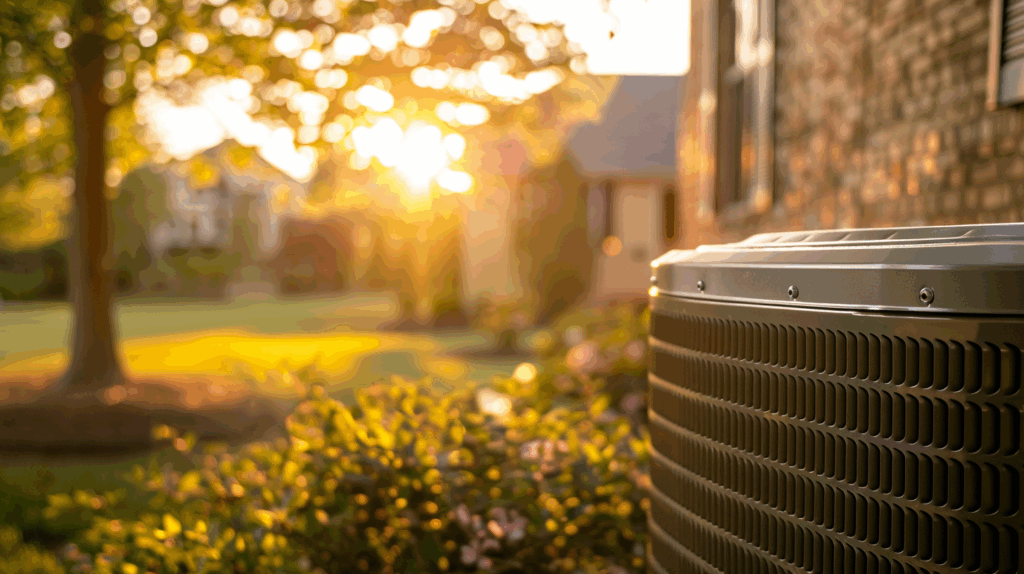
Issue #2: HVAC System Failures
HVAC failures create immediate tenant emergencies, especially during temperature extremes. Most jurisdictions require landlords to provide heat, and many now include air conditioning in habitability requirements.
Why this gets expensive:
- Neglected filter changes shorten system life
- Deferred annual service leads to major failures
- After-hours emergency calls during peak seasons command premium rates
- Complete system failure forces expensive replacement on your timeline, not your budget
The cost comparison:
- Prevention: Bi-annual HVAC service runs $150-300 annually
- Emergency repair: After-hours summer AC failure costs $500-1,500
- System replacement: Full HVAC replacement runs $5,000-10,000+
Systems receiving regular maintenance last 15-20 years. Neglected systems fail prematurely. Tenants experiencing prolonged HVAC failures almost never renew their leases.
How to prevent it:
- Schedule professional service twice annually (spring and fall)
- Replace air filters quarterly or verify tenant compliance monthly
- Install programmable thermostats to prevent tenant misuse
- Track system ages across your portfolio
- Budget for replacement at 15-20 years instead of waiting for emergency failure
Issue #3: Water Heater Failures
Water heaters fail suddenly and can cause significant property damage when tanks rupture. Hot water is legally required for habitability, so failures demand immediate response regardless of timing or cost.
Why this gets expensive:
- Sediment accumulation accelerates tank corrosion
- Anode rods protecting tanks are rarely inspected or replaced
- Typical 8-12 year lifespan means predictable replacement needs
- Tank ruptures cause extensive water damage to flooring, drywall, and belongings
The cost comparison:
- Prevention: Annual flushing and inspection costs $100-150
- Emergency replacement: After-hours service runs $1,500-2,500
- With water damage: Tank rupture with flooring/drywall damage costs $5,000-10,000+
Families with children find cold water particularly problematic. Water heater failures generate immediate, urgent tenant calls demanding instant resolution.
How to prevent it:
- Schedule annual professional inspections and sediment flushing
- Track water heater ages and label each unit with installation date
- Budget for proactive replacement at 10-12 years
- Install leak detection pans and water alarms beneath units
- Consider tankless systems for long-term rental properties (20+ year lifespan)
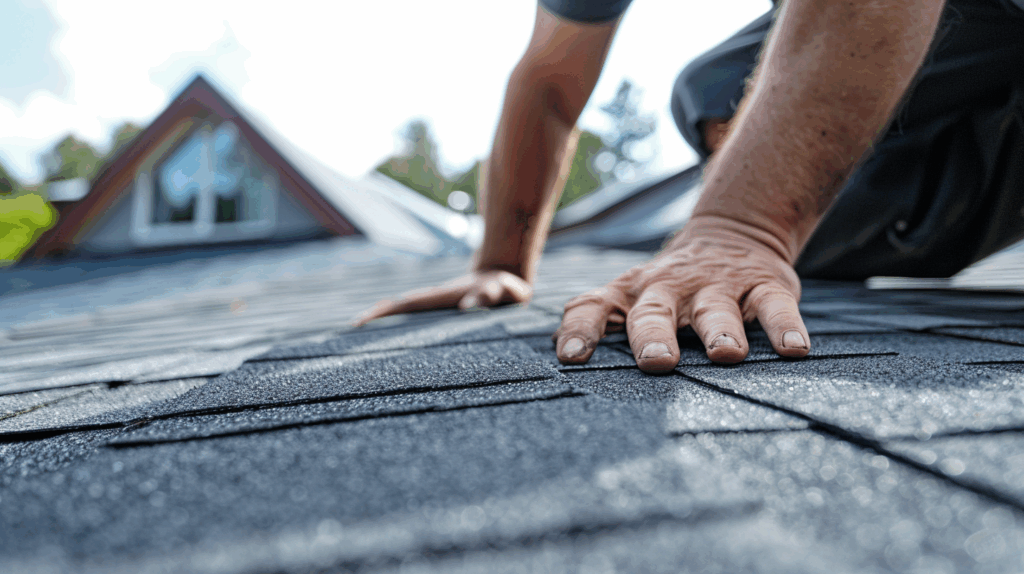
Issue #4: Roof Leaks
Roof leaks start small and cause exponentially increasing damage over time. A minor leak that costs $500 to repair becomes a $5,000 ceiling and insulation replacement if ignored.
Why this gets expensive:
- Missing shingles and damaged flashing go unnoticed
- Clogged gutters overflow, allowing water behind fascia
- Tenants don’t report small ceiling stains until major damage occurs
- Water infiltration creates mold, damages belongings, threatens structural integrity
The cost comparison:
- Prevention: Annual roof inspection costs $150-300
- Minor repair: Early repairs run $300-800
- Major damage: Ignored leaks cost $2,000-5,000+ for ceiling, insulation, and drywall repair
- Premature replacement: Neglected roofs requiring early replacement cost $8,000-15,000
How to prevent it:
- Schedule annual professional inspections, especially after major storms
- Clear gutters seasonally (leading cause of preventable roof leaks)
- Address minor repairs immediately when identified
- Budget for roof replacement based on age (asphalt shingles last 15-25 years)
- Encourage tenants to report ceiling stains immediately
Issue #5: Electrical Panel and Wiring Issues
Electrical problems represent the most serious safety concern for rental property owners. Faulty electrical systems cause fires, create liability exposure, and can render properties legally unrentable.
Why this gets expensive:
- Properties built before 1980 often have outdated panels or insufficient amperage
- Federal Pacific and Zinsco panels are known fire hazards that insurance companies often refuse to cover
- Tenant behavior (space heaters, window AC units) overloads circuits
- Electrical fires cause devastating property damage and potential liability claims
The cost comparison:
- Prevention: Professional electrical inspection runs $200-400
- Proactive upgrade: Panel upgrade costs $1,500-3,000
- Fire damage: Electrical fires start at $10,000 and escalate rapidly
- Liability exposure: Tenant injury from electrical issues creates potentially devastating legal consequences
How to prevent it:
- Require professional electrical inspections for properties over 30 years old
- Replace Federal Pacific, Zinsco, and fuse box panels proactively
- Install GFCI and AFCI protection in required areas
- Address tenant complaints about flickering lights or tripping breakers immediately
- Document all electrical maintenance for liability protection
Protecting Your Rental Property Investment
Understanding common rental property maintenance issues gives you the knowledge to prevent expensive failures. The difference between profitable rental properties and constant headaches comes down to implementation.
Smart landlords budget 1-2% of property value annually for maintenance reserves. They schedule annual inspections for all critical systems. They build relationships with reliable contractors before emergencies strike. Most importantly, they treat maintenance as investment protection rather than inconvenient expense.
Start by evaluating your current properties. How old are critical systems? When did you last have professional inspections? Which properties need immediate attention? Then schedule the preventive maintenance that protects your cash flow, keeps tenants satisfied, and preserves property value.
The investment in preventive maintenance pays dividends through lower costs, better tenant retention, and protected property values.