

Some materials speak loudly in space.
Marble makes its presence known as opulent, polished, and always dressed to impress. Porcelain is the pragmatic minimalist, clean-cut and quietly modern. And then there’s limestone; a softer character, often cast in the role of rustic traditionalist.
You’ll find it in sun-drenched farmhouses, countryside kitchens, or tucked beneath terracotta roofs in some charming European village.
But limestone is more versatile than it’s often given credit for.
Lately, designers have been pulling it out of the pastoral narrative and reworking it into something fresher; quieter, yes, but also more architectural. In contemporary bathrooms, limestone flooring is proving to be an unexpectedly elegant foundation: matte, tonal, and endlessly adaptable.
Styled not with vintage tubs and wrought iron hooks, but with clean lines, warm minimalism, and thoughtful restraint. Here’s how limestone is stepping out of the farmhouse, and settling beautifully into the modern bathroom.
The modern appeal of limestone
What makes limestone so adaptable in contemporary design is its inherent softness, not in durability, but in tone and texture. It offers a matte, slightly honed finish that doesn’t overwhelm a space, while its earthy undertones and subtle veining lend themselves to a soothing, spa-like atmosphere.
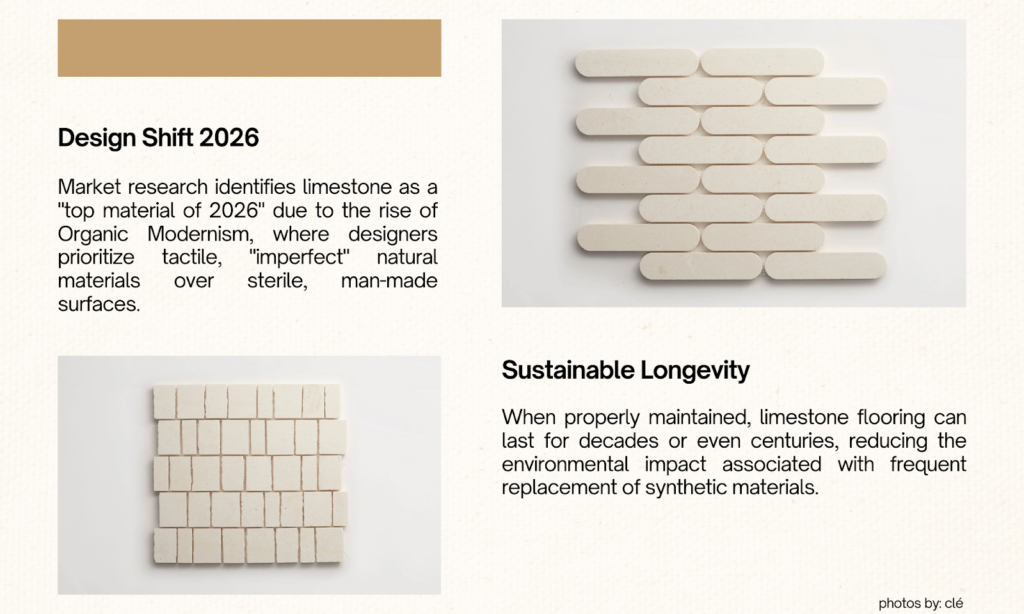
Unlike high-gloss stone or slick porcelain, limestone has an organic finish that reads as effortlessly modern, especially when paired with minimalist forms and warm neutrals.
Whether you’re remodeling a primary suite or designing a compact guest bath, limestone sets the stage for a bathroom that feels grounded, fresh, and refined. Because limestone is a significant investment in your home’s infrastructure, it is wise to consider how such strategic renovations increase home resale value by creating a distinct, high-end identity that appeals to the luxury market.”
1. Go tonal: Pair limestone with soft, neutral palettes
One of the most effective ways to modernize limestone is by embracing tone-on-tone palettes. Instead of contrast, think quiet cohesion, layering soft neutrals like warm whites, greige, sand, or ivory to let the material’s natural depth take center stage.
For a refined yet inviting look, consider using a cream limestone bathroom tile from clé. Its subtle color variation and velvety matte finish make it a perfect match for contemporary bathrooms that favor restraint over drama.
Pair it with plaster walls, brushed brass fixtures, and natural wood to create a warm minimalist space that feels curated, not cold. Pair limestone flooring with:
- Microcement or plaster walls for a smooth, seamless finish
- Warm oak or walnut vanities for an earthy-modern aesthetic
- Brushed nickel or matte black fixtures that add sophistication without stark contrast
The result is a calming, cohesive look that feels high-end without being over-designed.
2. Choose large-format limestone tiles for a sleek look
While smaller, tumbled limestone tiles are often used in rustic or vintage spaces, opting for large-format limestone slabs or oversized tiles immediately shifts the style toward the contemporary.
Fewer grout lines = less visual clutter. Large tiles make your bathroom floor feel expansive and intentional, especially when laid in a linear or stacked pattern.
For a truly modern effect:
- Use rectified edges for tight grout lines
- Match grout color closely to the tile
- Consider a matte sealer to maintain the stone’s natural look without adding gloss
3. Add contrast with bold architectural elements
To keep your limestone bathroom from feeling too soft or neutral, introduce architectural contrasts in the form of bold lines, textures, or materials. Ideas include:
- Frameless glass showers with black metal trim
- Floating vanities with crisp edges and handleless drawers
- Freestanding bathtubs in matte black or pure white
- Recessed LED lighting to create drama and highlight floor texture
Limestone acts as the grounding element, allowing bolder design moves to shine without feeling disjointed. Choosing the right finish for a busy family hub is about more than just aesthetics; investing in the best materials for high-traffic surfaces ensures your kitchen remains both beautiful and functional for years to come.
4. Use limestone to create seamless transitions
One of the best-kept secrets in contemporary bathroom design is the use of a single flooring material across multiple zones, and limestone does this beautifully. Extend the limestone tile:
- From the main floor into the shower stall
- Up the side of a built-in bench or half-wall
- Onto a floating shelf or tiled niche
This continuity creates a sense of flow and intention, turning your bathroom into a curated experience rather than a collection of parts.
5. Embrace warm minimalism
Contemporary doesn’t have to mean cold. In fact, warm minimalism is one of today’s most sought-after aesthetics, and limestone is a perfect match.
Here’s how to achieve it:
- Keep lines clean and architectural, but soften them with natural textures
- Choose linen towels, clay vessels, and hand-thrown accessories over mass-produced decor
- Mix limestone with other organic elements like wood, unlacquered brass, or natural stone countertops
This approach feels timeless, rooted, and livable, not sterile or overly industrial.
6. Mix limestone with unexpected finishes
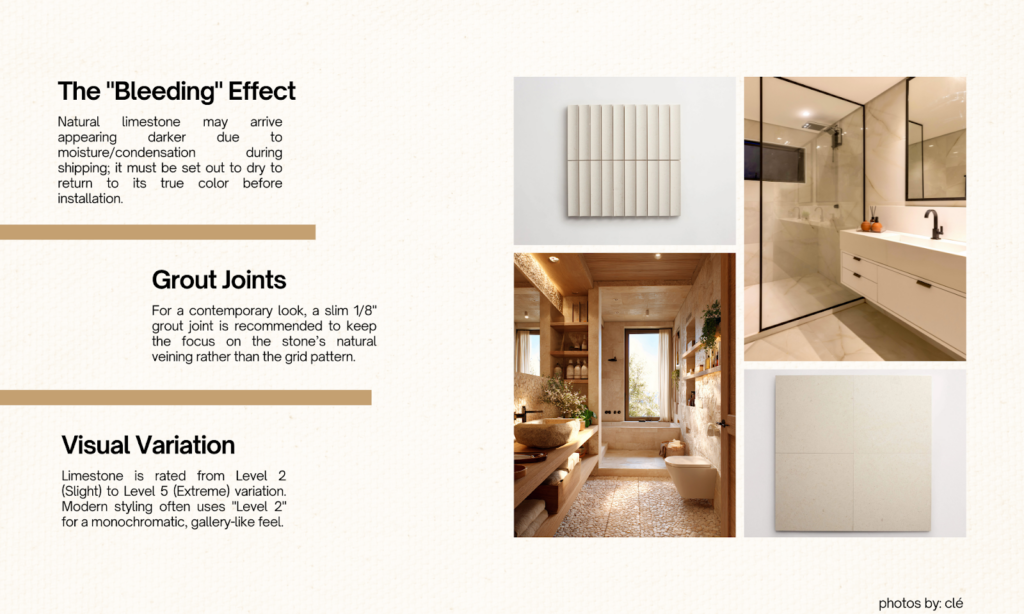
To push the look further into contemporary territory, try pairing limestone with more modern or industrial materials for a striking contrast. Some of the most stunning pairings include:
- Limestone + brushed steel — sleek, refined, and architectural
- Limestone + fluted glass — softens the light while adding vertical texture
- Limestone + concrete — balances rough and smooth, matte and raw
- Limestone + glossy zellige — the handmade sheen against limestone’s matte texture creates depth and visual interest
These juxtapositions give your bathroom edge without overpowering the calm, understated base that limestone provides.
7. Don’t forget the ceiling and lighting
Modern bathroom design is about more than tile and hardware. It’s also about the atmosphere. And limestone’s neutral base gives you the freedom to get creative with overhead details. Consider:
- A wood-clad ceiling for a spa-inspired retreat
- Oversized pendant lighting in sculptural forms
- Recessed strip lighting under vanities or in wall niches
- Skylights or clerestory windows to wash the stone floor in natural light
Limestone loves light, as it brings out its movement, texture, and depth. Use it to your advantage.
Caring for limestone in the bathroom
While limestone is durable and well-suited for flooring, it is a porous natural stone, which means sealing and proper care are essential for long-term beauty.
Tips:
- Seal upon installation and reseal every 1–2 years
- Use pH-neutral cleaners to avoid etching or discoloration
- Place bathmats near high-moisture zones to reduce direct water contact
- Clean up soap, shampoo, or spills quickly to avoid buildup
With proper care, limestone flooring can age gracefully and gain a lived-in patina that only adds to its charm.
Final thoughts
Limestone flooring has stepped out of the farmhouse and into the future. Its quiet texture, muted warmth, and versatile elegance make it an ideal choice for contemporary bathrooms that seek serenity without sterility.
Whether you’re designing a compact urban ensuite or a sprawling spa-inspired primary bath, limestone offers a foundation that is natural, timeless, and beautifully modern. The key lies in how you style it, with restraint, contrast, and a thoughtful balance of materials that make your space feel both curated and comfortable.
Because when it comes to bathroom design, the floor should do more than just support — it should set the tone.