
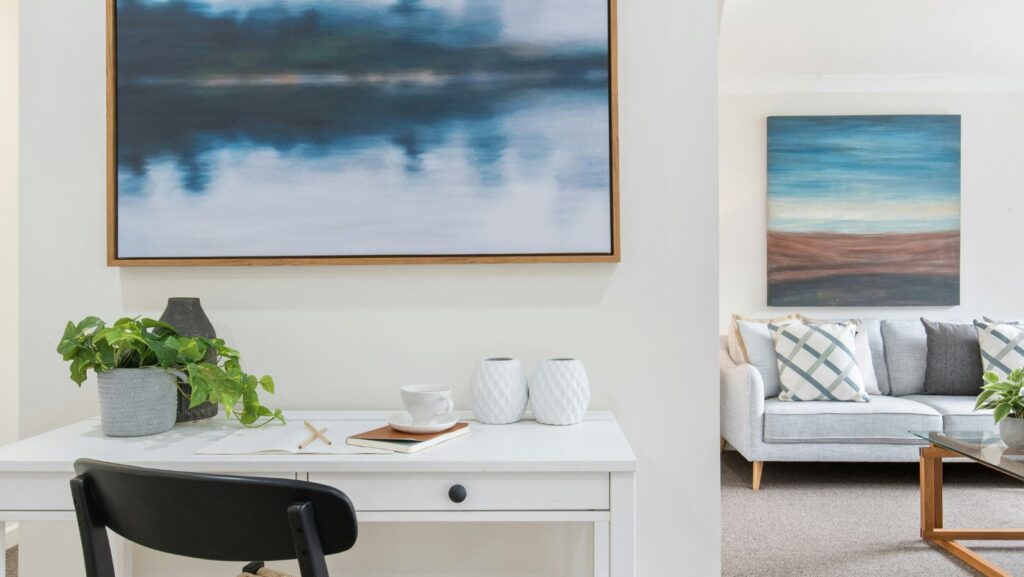
Modern interiors, with their clean lines and open spaces, might not seem the perfect fit for traditional art. But paintings can work beautifully in contemporary homes when they’re chosen and arranged with care. They soften minimal rooms and bring personal meaning into spaces that might otherwise feel spare.
Modern Home Aesthetic
Modern homes favor simplicity, light, and function: neutral walls, open layouts, and minimal furniture. Paintings can support this look rather than compete with it. A single strong painting can act as a room’s central piece. It could be a large abstract print by Mark Rothko with bold use of color. Or a striking surrealist piece by Salvador Dali. Or a graytone painting by Anselm Kiefer to fit the neutral walls.
You might prefer a group of small works to guide the eye through a large room. See how the art breathes and avoid crowding it with too many objects.
Think about how the colors work alongside your walls, furniture and any other objects. A painting that echoes one or two tones already present in the room feels intentional. Bold contrast can work, but it might be best if balanced by calm surroundings. When the rest of the space is quiet, the painting has room to speak.
Personal Stories
Modern design doesn’t have to mean impersonal, cold shades and a lack of personality. Paintings are one of the clearest ways to show who lives in a space. Cultural, spiritual, or historical themes can live comfortably in a modern home when they’re framed and scaled well. A piece from the Israeli Center of Judaica, for example, can bring heritage and meaning into a modern living room without feeling out of place.
What matters is choosing art for emotional reasons. A painting connected to family history, faith, a city you love, or a moment in your life will feel right in a home of any style. Rather than shopping for a style that looks current, look for a painting that reminds you of something specific or makes you pause when you see it.
Placement Matters Too
In modern homes, less often works better. Think about sightlines and how people move through the room. A painting above an armchair, at the end of a hallway, or opposite a window can shape how the space feels.
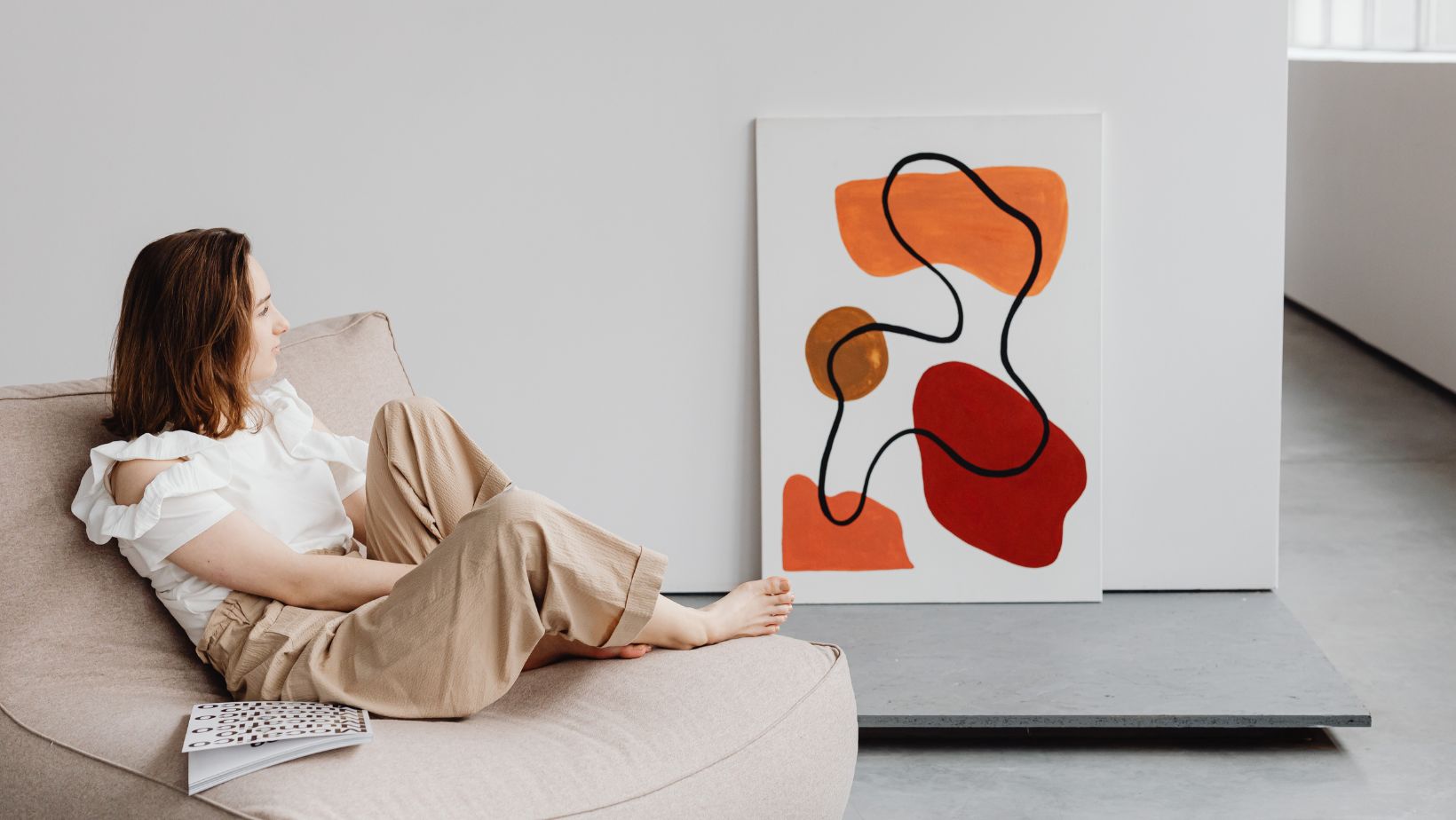
Art usually works well at eye level when standing, though dining areas and bedrooms might allow more flexibility. Natural light can enhance a painting during the day, but controlled artificial light helps it hold presence at night – soft spotlights work well without creating glare.
Balancing Old And New Elements
You might wonder whether traditional paintings will clash with modern furniture. In practice, contrast often creates more interest. An older style painting can stand out nicely against smooth walls and simple shapes. The frame can act as a bridge – clean frames help classic art feel current; more ornate frames might be used if the rest of the room stays restrained.
Also think about texture. Paintings with visible brushwork or layered surfaces add warmth to rooms filled with glass and metal. The contrast makes the space feel homely rather than staged.
Art Changes With Life
A home usually evolves as your tastes and needs change. Furniture moves, colors change, and you adjust your daily routine. Paintings can move too. Rotating art between rooms keeps spaces fresh and might help you see familiar art in new ways.
Paintings fit into modern homes not by following strict rules, but by responding to space, light, and personal meaning. Art reminds us that modern design still leaves room for expression.