
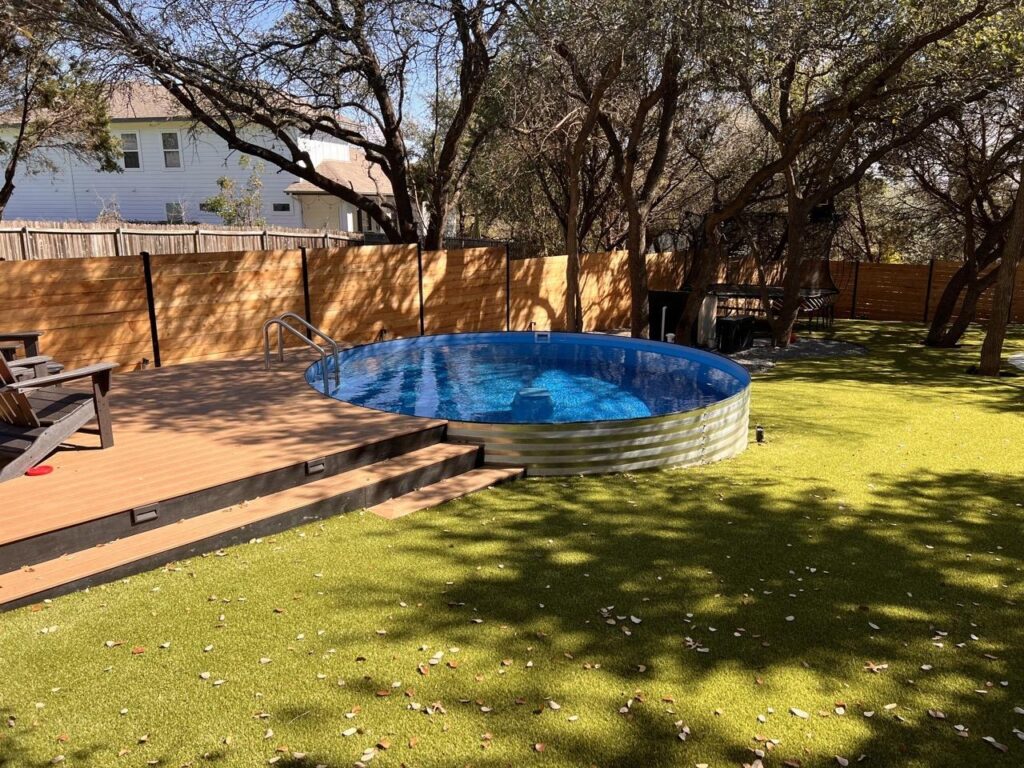
A sloped backyard doesn’t have to mean no pool. In fact, plenty of homeowners with seriously uneven yards end up with some of the best-looking pool setups around – elevated views, multi-level decks, built-in retaining walls that double as design features. The slope stops being a problem the moment you start working with it instead of against it.
That said, installing a pool on uneven ground does require more planning than a flat yard. The type of pool you choose, how the ground is prepared, and whether you need a deck or retaining structure all play into the final cost and timeline. Here’s what you actually need to know.
Is an Uneven Backyard a Problem for Pool Installation?
It depends on the degree of the slope. A yard that drops a few inches over a wide area is pretty easy to work with – basic grading and leveling will handle it. A yard that drops several feet over a short distance is a different story. That kind of slope usually means excavation, retaining walls, or choosing a pool type that doesn’t require a perfectly flat surface to begin with.
The bigger issue isn’t the slope itself – it’s water drainage. If the ground around your pool isn’t properly graded after installation, rainwater can pool up in the wrong places, erode the soil, or put pressure on the pool walls over time. That’s why proper site prep matters as much as the pool itself.
How to Put a Pool in a Sloped Yard
The general approach comes down to two options: level the ground to fit the pool, or choose a pool that can adapt to the slope. Leveling the ground typically means cutting into the high side of the yard and either removing that soil or using it to fill in the low side. This is called cut-and-fill grading. For steep slopes, you may also need a retaining wall to hold back the soil on the uphill side and prevent erosion. These walls can be made from concrete blocks, natural stone, timber, or poured concrete – each with different price points and aesthetics.
The alternative is going with a semi-inground or partially recessed pool. Instead of forcing the yard to be flat, you bury part of the pool into the slope and let the rest sit above grade. This dramatically reduces the amount of excavation needed and can actually look more natural in a hillside setting – and it’s exactly the kind of project StainlessSwim handles with their backyard plunge pools, from site prep all the way to finished installation.
Best Pool Options for an Uneven Backyard
Not all pool types handle slopes equally well. Traditional inground pools require a mostly flat, fully excavated site – which means significant earthwork on a sloped yard. Above-ground pools are cheaper but they need level ground, so you’re still doing some grading or building a level platform underneath.
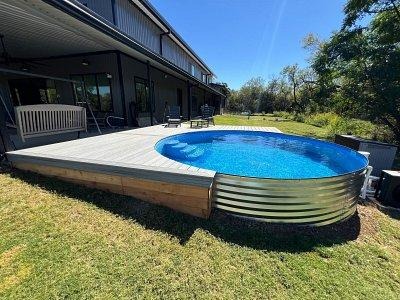
The sweet spot for uneven yards is a semi-inground pool. You can recess it partially into the hillside, which gives you the look and feel of an inground pool without digging the entire thing out. StainlessSwim’s tank pools are built exactly for this kind of situation – they can go fully above ground, partially buried, or completely recessed depending on what your yard allows. The galvanized steel walls are strong enough to handle uneven soil contact on one side, which makes them way more flexible than a standard above-ground pool that would buckle or warp under that kind of pressure.
For sloped yards specifically, round tank pools also have a structural advantage – the circular shape distributes pressure evenly across the entire wall, so there’s no weak corner to worry about when part of the pool is sitting against a hillside. That matters more than people realize, because a rectangular pool pressed into a slope puts concentrated stress on its corners and flat sections, which can lead to warping or instability over time.
Building a Pool Deck on a Sloped Backyard
A deck isn’t just a nice-to-have on a sloped yard – it’s often a necessity. When one side of your pool sits higher than the other, you need a level surface to stand on, walk around, and enjoy the space safely. A deck solves that by bridging the gap between different elevations.
On a gentle slope, a simple ground-level deck will do. On steeper terrain, you’ll likely need a raised or multi-level deck with posts set at different heights. This is also where the design gets interesting – tiered decks create a natural flow between levels, and they give you spots for seating, planters, or even outdoor kitchens that you wouldn’t get from a flat yard layout.
Material-wise, composite decking holds up well in outdoor conditions and doesn’t require the same maintenance as wood. Treated wood is still a solid option for the structural frame underneath. The main thing to get right is the post depth – on a slope, deck footings need to go deep enough to stay stable as the ground shifts with rain and seasonal changes.
How Much Does It Cost to Build a Pool on a Sloped Yard?
More than a flat yard – that’s the honest answer. But the range is wide depending on the severity of your slope and what you’re starting with. For a mild slope with minimal grading needed, you might add $500-$2,000 to a standard pool installation. For steeper terrain requiring significant excavation, retaining walls, or structural fill, that number can jump to $5,000-$15,000 or more before the pool itself even goes in. Retaining walls alone can run $30-$80 per square foot depending on the material and wall height.
A semi-inground tank pool can reduce those costs significantly because you’re not trying to create a fully flat site from scratch – you’re working the slope into the design. StainlessSwim’s pools start at $9,399, and since installation includes excavation, leveling, and plumbing setup, you’re not piecing together a dozen separate contractors to make it work.
The best way to get an accurate number is to have someone look at the actual yard. Slope angle, soil type, drainage situation, and what you want the finished space to look like all affect the final price.
Final Thoughts: Turning an Uneven Yard Into a Pool-Ready Space
A sloped backyard takes more thought than a flat one, but it’s far from a dealbreaker. The right pool type, solid site prep, and a deck that handles the elevation change are really all it takes. Semi-inground pools are the most practical choice for uneven terrain – they reduce excavation, adapt to the slope, and tend to look better in that kind of setting than a fully above-ground option would.
StainlessSwim specializes in custom tank pools built from galvanized steel that can go fully above ground, sit partially recessed, or drop completely into the slope depending on what your yard calls for. Uneven ground isn’t a dealbreaker here – the steel construction and flexible placement options make it a solid choice for sloped or uneven backyards. Every project is handled in-house, from site prep and excavation to deck construction and plumbing.