
Table of Contents
ToggleEvery year, termites devour hundreds of thousands of houses in the United States. What is unfortunate is that one can have this infestation for many years without knowing it. It will only become apparent after a home has already been overtaken by these pests. The National Pest Management Association (NPMA) estimates the annual property loss caused by these insects at a staggering $6.8 billion.
The termite swarm season causes problems that extend beyond bug extermination needs. Homeowners who have recently bought their homes together with home sellers face more serious problems when a swarm appears.
Knowing when the termite swarm season happens is important. Swarms provide the first visible signs of an infestation that has been developing silently for several years.
Let’s discuss the implications of the swarm season and why it should be common knowledge among homeowners.
What Swarm Season Tells You About the History of an Infestation
The humid air and annual termite bloom occurring at the start of spring result in a spectacle of termite swarms. Termite swarm comprises several reproductive members, known as alates or swarmers, that leave an existing colony with the aim of establishing a new colony.
Light tends to attract these types of bugs, making them congregate at windows, door frames, and light fittings where they lose their wings upon landing.
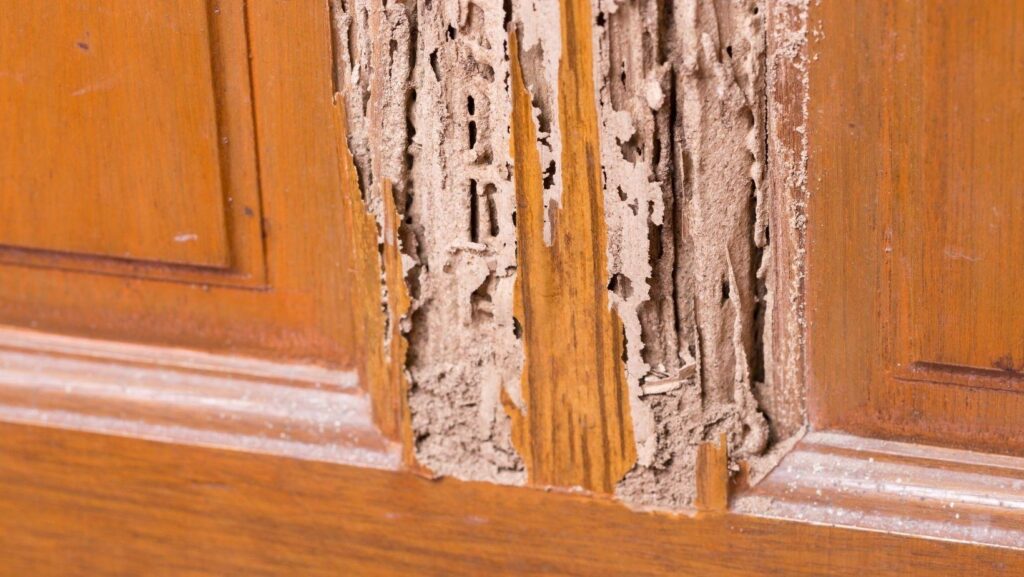
Homeowners shouldn’t be too alarmed by termite swarms since colonies don’t begin to produce swarmers until they are developed fully. Subterranean termite colonies do not reach the range of a termite swarm until well after three to five years, sometimes even longer. Swarmers coming into the home does not necessarily mean trouble in terms of an imminent infestation. Rather, the occurrence of swarmers suggests to the homeowner that a colony has established itself in or below the ground on the property. In most cases, this situation causes the so-called hidden structural damage to the subflooring, sill plates, joists or the overall framework that cannot be seen from outside.
Seller Disclosure Obligations and What They Cover
In most states, sellers of residential property are required to complete a disclosure statement about the property’s condition before closing. The forms require information about wood-destroying organism infestations, wood-destroying organism treatments, and any termite-related structural damage that exists.
Most legal systems require proof that sellers either knew about the property defect or should have known about it. The relevant question for termites establishes whether the seller had proof from a professional assessment or if they had visible evidence that they should have recognized.
A seller is accused of fraudulent misrepresentation when they respond “No” to the disclosure form even when they have become aware that there are termite problems in the house. In a 2024 dispute, the concerned defense party has paid 120,000 dollars to the concerned plaintiff in fulfillment of an agreement. The plaintiff had raised the issue of the damaged wood and the termite problem in the crawl space with the defendant, who knowingly provided inaccurate information to the plaintiff regarding the property’s termite problem.
For more information on what should be disclosed during real estate transactions, visit the law firm website https://www.pwplaw.com/
What “As Is” Does Not Protect
An “as is” provision requires the seller to provide complete protection against all existing property defects. The seller must not present false property information on the legal disclosure document.
In most states, the courts have taken the view that, in the presence of fraud or fraudulent concealment of a material fact, an ‘as is’ clause may not apply. Infestation of termites affects both the purpose of the building and the investment in it. A seller who paints over a wooden structure already eaten by termites, cleans out any mud lines before showing a property, or uses any other means to disguise the presence of the termites is vulnerable to allegations of fraud.
Under the residential disclosure laws in states that require specific residential disclosures, misrepresentation on the disclosure form creates separate statutory violations that operate independently from common law fraud. States which require detailed wood-destroying organism disclosure include Mississippi, Maryland, California, and Florida. The state penalties include recovery of repair costs, diminution in property value, and additional damages for willful fraud cases.
The Wood Destroying Insect Report and What It Proves
The majority of real estate deals that require lender involvement need property owners to obtain a Wood Destroying Insect (WDI) report. This report is commonly referred to as a termite letter and must be completed by an authorized pest control inspector. The document functions as an official assessment of wood-destroying organism activity through its evaluation of visible evidence rather than serving as a standard home inspection. An inspector who fails to identify and report readily observable signs of termite activity in the report can face professional negligence liability if the buyer suffers harm by relying on a flawed report.
A termite inspection company received a $1,068,000 verdict after its inspectors showed negligence by failing to discover and document active termite damage, which they should have seen during their inspection. The determination of these cases depends on the inspector’s actual examination work, the standard inspection protocols for detecting visible evidence, and the report’s accuracy in showing what the inspector found. The WDI report from the sale becomes the primary document for legal examination of knowledge and timelines after a post-purchase swarm happens.
What a Buyer Who Discovers Post-Purchase Termite Damage Should Do
The existence of a termite swarm, which occurs after business hours, does not establish grounds for a lawsuit. A termite inspection will usually start once a termite swarm is discovered in the building. The inspection is normally done outside normal business hours. There are several important questions that may arise in this context: Did the infestation already exist for a long time when the property was bought? Did the seller know about it? Did the seller inform the buyer about it? Was the WDI report on termination of structures on the property at the time of the inspection accurate? Addressing these questions will help clarify how to approach the situation.
There are practical steps to preserve these options and build evidence. Hire a professional who performs assertive structural inspections to appraise the extent of the pest’s attack.
Invite several contractors to assess the structural damage and repair costs. Doing this action helps preserve the original property disclosure material, including the inspection report, and all documents regarding the transaction intact. You must also avoid direct communication with the seller or their agent about the issue before consulting legal counsel. Statements made in the immediate aftermath of discovery can affect a claim’s value and trajectory in ways that are difficult to reverse.
Homes that have untreated termite damage or undisclosed termite damage sell for 20 percent less than comparable properties. Initiating a legal claim seeks to recover damages, which include the reduction in value, the expenses required for repairs, and the necessary costs for temporary relocation during remediation. Swarm season is when those facts first become visible. The effectiveness of one’s legal pursuit depends on their actions and decisions following the discovery of termite infestation.