
Table of Contents
ToggleThere’s something deeply satisfying about stepping into a backyard and seeing a raised garden bed bursting with life. Whether you’re growing heirloom tomatoes in Ohio, peppers in Texas, or kale in the Pacific Northwest, the foundation of your success isn’t the seeds you plant—it’s the soil you provide. For many American gardeners, the journey from a barren patch of yard to a thriving vegetable oasis begins with one critical question: what exactly goes into a raised bed? The answer isn’t as simple as scooping up dirt from the backyard. In fact, the difference between a mediocre harvest and a bountiful one often comes down to understanding soil structure, nutrient density, and drainage. This guide will walk you through everything you need to know about crafting the perfect growing medium, including when it makes sense to purchase Bulk Soil for Gardens versus mixing your own.
Why Raised Beds Demand a Different Approach
Unlike traditional in-ground gardens, raised beds are essentially large containers sitting on top of your existing landscape. This means they don’t benefit from the natural soil profile that lies beneath your lawn. The soil you fill them with must be self-sufficient—it needs to hold moisture without becoming waterlogged, provide a steady supply of nutrients, and maintain a loose structure that allows roots to penetrate deeply.
Many first-time gardeners make the mistake of filling raised beds with topsoil alone. While topsoil is fine for patching a lawn, it compacts quickly in a confined space, suffocating roots and preventing water from draining properly. On the other hand, using pure compost can lead to overly rich conditions that burn young plants and encourage weak, leggy growth. The ideal raised bed mix is a balanced blend that mimics the best natural garden loam but with enhanced aeration.
The Golden Ratio: Components of an Ideal Mix
When it comes to building a raised bed from scratch, experienced gardeners across the United States often rely on a simple formula: roughly 60% quality topsoil, 30% compost, and 10% aeration materials. This combination provides the structural integrity of real soil, the nutrient density of decomposed organic matter, and the pore space necessary for oxygen exchange.
The topsoil acts as the backbone, providing minerals and a stable medium for roots. The compost—whether from your own pile, municipal sources, or bagged products—introduces beneficial microorganisms and slow-release nutrients. The aeration component, usually perlite, pumice, or coarse horticultural sand, prevents compaction and ensures that excess water can escape. This trio works synergistically, creating an environment where earthworms thrive and microbial activity flourishes.
However, proportions can vary depending on your regional climate. Gardeners in arid states like Arizona or Nevada might increase the compost ratio to improve water retention, while those in rainy regions like the Pacific Northwest may add extra aeration to prevent soggy conditions.
Topsoil vs. Garden Soil vs. Potting Mix: Know the Difference
Walking down the soil aisle at any home improvement store in the U.S. can be overwhelming. Bags labeled “garden soil,” “potting mix,” and “topsoil” are stacked side by side, each promising vibrant growth. Understanding the distinctions is crucial before you start filling your beds.
Topsoil is exactly what it sounds like—the uppermost layer of the earth’s crust, often screened and sold in bulk. It’s heavy and dense, making it a poor standalone choice for raised beds. Garden soil is typically topsoil enriched with compost or other organic matter, designed to be mixed into existing ground gardens. It’s still too dense for raised beds on its own. Potting mix, despite its name, contains no actual soil. It’s a soilless blend of peat moss, perlite, and compost, designed for containers where drainage is paramount. While potting mix works for small planters, it can be too lightweight and expensive for large raised beds.
For raised beds, you want something in between these extremes. A purpose-made raised bed mix, available from many landscape supply companies, combines the best of all worlds. If you’re undertaking a large project, ordering
Bulk Soil for Gardens from a local supplier is often more economical than purchasing dozens of individual bags, and it ensures consistency across your entire bed.
The Role of Organic Matter and Compost
Organic matter is the lifeblood of any healthy garden soil. In raised beds, where the volume of soil is finite, maintaining a high level of organic content is essential. Compost serves multiple purposes: it feeds soil organisms, improves cation exchange capacity (the soil’s ability to hold onto nutrients), and helps buffer pH levels.
When selecting compost, look for a dark, crumbly product with an earthy smell. Avoid anything that smells sour or ammonia-like, as this indicates incomplete decomposition. Many American municipalities offer free or low-cost compost made from yard waste, which is an excellent budget-friendly option. You can also incorporate worm castings, which are rich in plant-available nutrients and beneficial bacteria.
Over time, the organic matter in your raised bed will break down and settle. This is a natural process, and you’ll notice the soil level dropping by an inch or two each season. Plan to top-dress your beds annually with an inch or two of fresh compost to replenish what’has been consumed by your plants.
Drainage and Aeration: The Unsung Heroes
If there’s one mistake that ruins more raised beds than any other, it’s poor drainage. When soil becomes waterlogged, the air pockets fill with water, and roots are unable to access oxygen. This leads to root rot, fungal diseases, and stunted growth.
To prevent this, ensure your raised bed has adequate drainage holes if it has a solid bottom. Most raised beds, however, are open to the ground below, which allows excess water to escape naturally. To improve internal aeration, incorporate materials like perlite or pumice into your mix. These volcanic rocks are lightweight, porous, and don’t break down over time.
Another trick used by professional growers is to add a layer of coarse wood chips or logs at the very bottom of a deep raised bed. This is known as hugelkultur, a German technique that creates a “sponge” at the bottom of the bed. As the wood slowly decomposes, it releases nutrients and creates air pockets. However, this method is best for beds that are at least 18 inches deep, as fresh wood can temporarily tie up nitrogen as it breaks down.
Regional Considerations Across the United States
Your location within the United States plays a significant role in how you should approach your raised bed soil. A one-size-fits-all recipe rarely works from coast to coast.
In the humid Southeast, where red clay dominates the native soil, raised beds are a godsend. The imported soil mix allows for drainage that the native clay cannot provide. Gardeners here should focus on ensuring their mix doesn’t stay too wet, perhaps increasing the perlite ratio.
In the arid Southwest, water is precious. Raised beds dry out faster than in-ground gardens, so incorporating more compost and adding a layer of mulch on top of the soil is critical. Some gardeners in this region also mix in moisture-retaining crystals or use ollas (unglazed clay pots) buried in the soil to water slowly from below.
In the Midwest, with its rich glacial till, the focus is often on preventing compaction from heavy winter snow and spring rains. A raised bed mix high in organic matter helps buffer against these extremes. Northern gardeners in states like Minnesota or Maine also need to consider how their soil freezes and thaws, as this cycle can break down soil structure over time.
Soil pH and Nutrient Management
Most vegetables prefer a slightly acidic to neutral pH range of 6.0 to 7.0. In this range, nutrients like nitrogen, phosphorus, and potassium are most available to plant roots. Before planting, it’s wise to test your soil. Home testing kits are available at most garden centers, or you can send a sample to your local university extension office for a more detailed analysis.
If your pH is too low (acidic), you can add agricultural lime to raise it. If it’s too high (alkaline), elemental sulfur or peat moss can help lower it. However, in a freshly built raised bed, pH is rarely an immediate issue, as the commercial mixes are typically pre-balanced. The more critical factor is ongoing fertility.
Unlike in-ground gardens where roots can search deep for nutrients, raised beds have a finite nutrient supply. You will need to fertilize throughout the growing season. A balanced, slow-release organic fertilizer worked into the soil at planting time provides a solid foundation. Then, supplement with liquid fertilizers like fish emulsion or seaweed extract every few weeks during active growth.
Filling Your Bed: A Step-by-Step Approach
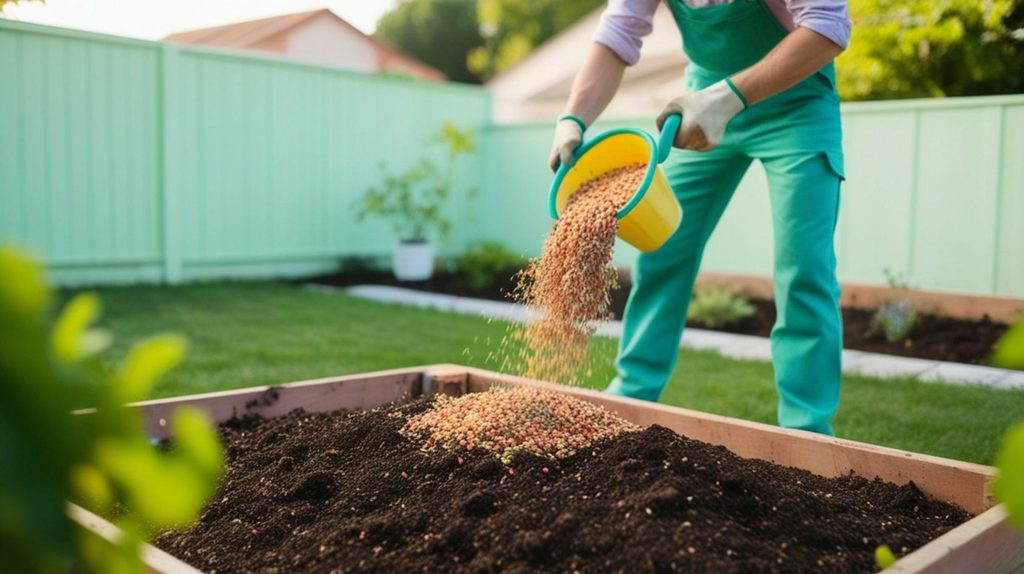
When you’re ready to fill your raised bed, the process matters as much as the materials. Start by placing a layer of cardboard or landscape fabric at the bottom of the bed. This suppresses any weeds or grass trying to grow up from below while allowing earthworms to eventually migrate up into your new soil.
If your bed is deep (over 12 inches), you can fill the bottom third with coarse organic material like small logs, branches, or leaves. This saves money on soil and creates a slow-release compost layer. However, be aware that this layer will decompose, causing the bed to settle significantly in the first year.
Fill the remaining space with your soil mix, stopping about an inch or two below the top edge. This leaves room for mulch and prevents soil from washing out during heavy rain. Water the bed thoroughly after filling. You’ll likely notice the soil settles after that first watering, so top it off again before planting.
For those tackling multiple beds or a large perimeter garden, the cost of bagged soil can be prohibitive. This is where purchasing
Bulk Soil for Gardens from a landscape supply yard makes sense. They will deliver a cubic yard or more directly to your driveway, and you can wheelbarrow it to your beds. A cubic yard of soil covers roughly 108 square feet at 3 inches deep, so measure carefully to order the right amount.
Maintaining Your Raised Bed Soil for Years to Come
Your work doesn’t end once the bed is filled. To keep your soil productive year after year, adopt a routine of seasonal maintenance. In the fall, after your last harvest, add a layer of shredded leaves or cover crops like winter rye. These protect the soil from erosion and add organic matter as they break down.
In the spring, test your soil again and amend as needed. Add a fresh layer of compost and lightly turn the top few inches of soil. Avoid deep tilling, which disrupts the delicate soil food web you’ve worked to establish. Earthworms and beneficial fungi will do the tilling for you if you give them the organic matter they need.
Crop rotation is another critical practice. Don’t plant tomatoes in the same bed two years in a row. Different plant families have different nutrient needs and are susceptible to different soil-borne diseases. By rotating, you prevent the buildup of pathogens and maintain a more balanced nutrient profile.
Conclusion
Building the perfect raised bed is a rewarding investment in your gardening future. The soil you choose today will determine the health and productivity of your plants for years to come. By understanding the balance between topsoil, compost, and aeration materials—and by considering your unique regional climate—you can create a growing environment that rivals the best farmland in the country.
Remember, the best soil for raised garden beds is not a single product but a thoughtful blend. It should feel light and crumbly in your hands, smell fresh and earthy, and support a bustling community of beneficial organisms. Whether you mix your own from bagged ingredients or order a truckload of premium blend, the principles remain the same. Start with a solid foundation, feed the soil rather than just the plants, and you’ll be rewarded with abundant harvests season after season. Happy gardening.