
Table of Contents
ToggleProfessional EV charger installation gives New Jersey homeowners a reliable, code-compliant way to charge battery electric vehicles overnight-eliminating trips to public stations and cutting daily fueling costs. This guide covers everything involved in residential home installation: electrical system requirements, charger types, permit processes, cost breakdowns, and how to select a qualified contractor. Commercial and public charging infrastructure falls outside this scope.
If you drive an electric vehicle and own a home in New Jersey, this article is built for you. Professional EV charger installation typically takes 2–4 hours on site and costs between $500 and $2,000 when no major electrical upgrades are needed. When a panel upgrade is required, total project costs can reach $4,000–$7,000.
By the end of this guide, you will understand:
- The differences between Level 1 and Level 2 ev chargers and how each affects installation complexity
- Electrical panel capacity requirements and circuit sizing for safe charging
- New Jersey permit requirements, inspection timelines, and approval steps
- Cost factors, available rebates, and how to budget accurately
- Why hiring licensed electricians, like Pier Electric, is essential for safety, code compliance, and incentive eligibility
Understanding EV Charger Installation Basics
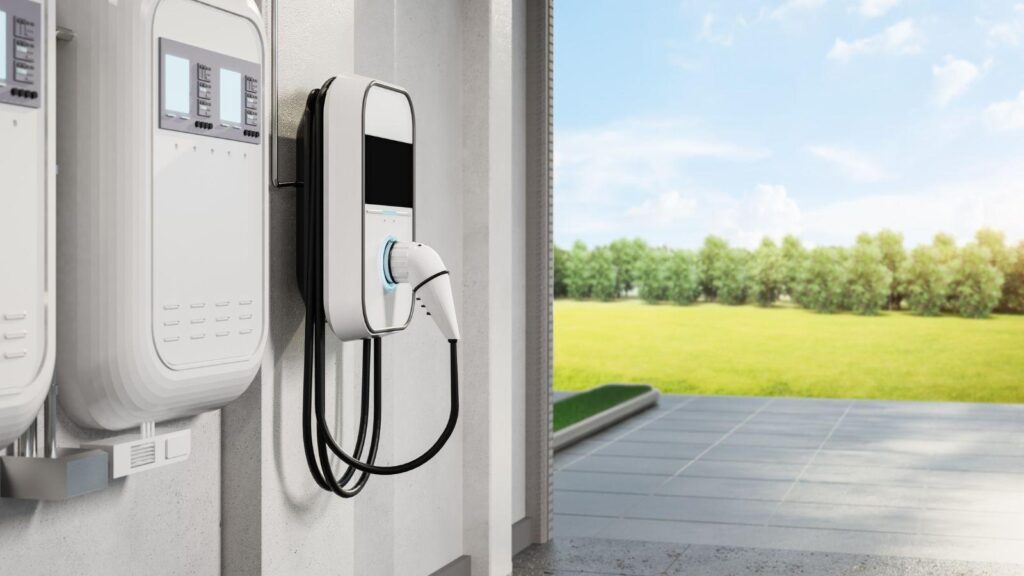
EV charger installation-formally, installing electric vehicle supply equipment (EVSE)-involves wiring a dedicated circuit from your home’s electrical panel to a mounted charging station, securing permits, and passing inspection. Proper installation matters because EV charging is classified as a continuous load under NEC Article 625, which demands specific wire sizing, breaker ratings, and safety protections. Without correct installation, risks include fire hazards, overheating wires, voided insurance coverage, and loss of rebate eligibility.
Beyond safety, EVs emit no tailpipe air pollutants, and research shows EVs can reduce respiratory illnesses like asthma in communities-making reliable home charging part of a broader health and environmental benefit. EVs also reduce noise pollution in urban areas and cities, and can achieve 40% lower emissions compared to internal combustion engine vehicles in some regions, though electricity generation impacts the overall emissions of EVs. Notably, electricity can be generated from solar, wind, and nuclear sources, meaning electric vehicles rely on a mix of fossil and renewable energy.
Types of Home EV Chargers
There are two main types of EV chargers relevant to residential use: AC and DC. Most home installations use AC charging. DC fast chargers, which can deliver 250–350 kW of power, are reserved for commercial stations. Most modern EVs accept both AC and DC charging.
Level 1 chargers use a standard 120-volt outlet and deliver roughly 3–5 miles of range per hour. Most EVs come with a Level 1 charging cord for standard outlets, so no dedicated installation is usually needed. However, this speed is limited and often insufficient for daily use with battery electric vehicles that have large traction battery packs.
Level 2 chargers operate at 240 volts and charge faster-a Level 2 charger can charge up to 25 miles per hour of range, making overnight recharge practical. These units draw between 30 to 50 amps of electrical load and require a dedicated circuit, permit, and professional installation. Level 2 chargers represent the standard for serious home installation.
How charger type affects installation complexity is straightforward: Level 1 may only need a household outlet, while Level 2 requires a new breaker, properly sized wiring, and often other components like conduit, mounting hardware, and GFCI protection.
Electrical System Requirements
Your electrical panel’s capacity determines whether you can support a Level 2 charger without upgrades. Most Level 2 chargers require a dedicated 240V circuit with a 30- to 60-amp double-pole breaker. Wire gauge depends on amperage and run length-typically 6 AWG or 8 AWG.
Many homes require an upgrade to a 200-amp circuit panel for Level 2 charging. Older New Jersey homes built before 1980 often have 100-amp service, which may lack the spare capacity for a 40–50 amp continuous draw alongside existing loads like HVAC, electric dryers, and cooking equipment. A licensed electrician is needed to perform electrical load calculations-summing existing draws plus the proposed charger-to verify whether your panel and main service can handle the additional electric power demand.
If panel capacity is limited, alternatives include load management systems that throttle charging based on total home demand, or installing a subpanel dedicated to the charging station. Understanding these electrical energy requirements sets the foundation for practical planning.
Planning Your EV Charger Installation
With electrical basics established, the next step is site-specific planning-where to install, what permits you need, and how to budget accurately.
Location Assessment and Site Preparation
Garage installations offer weather protection, shorter wiring runs, and simpler mounting. The physical charger is typically mounted 36 to 48 inches off the ground for comfortable access. Outdoor installations demand weatherproof enclosures (NEMA 3R or 4 rated), outdoor-rated conduit, and consideration of cord management during snow and ice-common concerns across New Jersey.
Distance from your electrical panel directly affects cost. A short run under 25 feet might cost $700–$1,200 for wiring and labor. Installing a charger far from the electrical panel can increase installation costs due to trenching through concrete, exterior walls, or finished spaces-potentially pushing wiring costs to $1,200–$1,800 or more. Consider where your vehicle parks and which side the charging port is on; you may need a charger with a 20–25 foot cord or an overhead cord reel for proper reach.
Permit Requirements in New Jersey
Under the NJ Uniform Construction Code, every Level 2 installation requires an electrical-subcode permit (F120). Homeowners are responsible for obtaining necessary installation permits, and electricians must secure applicable permits before installation begins. If a service upgrade is needed-say, moving from 100-amp to 200-amp service-your utility will require an Electric Service Information (ESI) application, which electricians coordinate with local utilities for permit handling.
Permitting times can vary significantly by location. Simple new-circuit permits typically take 7–18 business days for municipal review. Service upgrades, historic district reviews, or exterior-facing equipment may extend timelines to 4–7 weeks. Electricians can help obtain required permits for installations, streamlining the process.
Cost Planning and Budgeting
Equipment costs: Mid-range Level 2 units typically run $500–$1,200. Smart chargers with WiFi capability and energy monitoring cost more but enable load scheduling and may qualify for utility incentives.
Labor and wiring: Electrician hourly rates in New Jersey range from $85–$130/hour. A straightforward Level 2 circuit installation, mounting, and testing takes 4–8 hours. Installation typically requires a licensed and insured electrician.
Panel upgrades: Upgrading from 100-amp to 200-amp service generally costs $2,000–$4,500, depending on municipality, panel accessibility, and utility-side work.
Permit and inspection fees: Typically $50–$250, varying by town.
Rebates and incentives to reduce your cost:
- Federal Section 30C tax credit: 30% of total cost (equipment, labor, permits, panel work), capped at $1,000 for residential installations. The deadline for completed installations is June 30, 2026.
- Utility EV charger rebates: Up to $1,500 for residential Level 2 installations in some utility territories, plus up to $5,000 for pole-to-meter service upgrades. Note that some off-peak charging credit programs have closed to new applicants and are transitioning to Time-of-Use (TOU) rates.
- State “Charge Up NJ” program: Offers up to $250 for qualifying Level 2 home installations with licensed installers.
For a home with adequate panel capacity and a short wiring run, expect a gross cost of $1,200–$1,800-potentially dropping to $800–$1,300 after incentives. With a panel upgrade, gross costs reach $4,000–$7,000.
Common Challenges and Solutions
Insufficient Electrical Panel Capacity
Homes with 100-amp panels often cannot support a 40–50 amp continuous charger load. The primary solution is upgrading to 200-amp service, which may cost $2,000–$4,500. Utility rebate programs sometimes cover up to $5,000 for pole-to-meter service upgrades. Alternatively, smart load management systems can throttle charging power based on real-time home demand, avoiding a complete panel replace.
Complex Permit and Code Requirements
Municipal processes vary widely across New Jersey-fees, review timelines, and historic preservation requirements all differ. Working with experienced electricians who routinely handle EV charger permits in your area eliminates guesswork. They understand local regulation variations and maintain relationships with inspectors.
Installation Location Constraints
Older homes with panels in basements far from garages face expensive, long wiring runs. Solutions include installing a subpanel in the garage, routing wire in exterior conduit, or repositioning the charger closer to the panel. Outdoor installations require weatherproof enclosures and GFCI protection. Additionally, in 2024, some EVs gained the capability to send power back to homes during outages-a development worth considering when planning charger placement and electrical infrastructure.
While manufacturing an EV emits about 50% more CO2 than ICE vehicles, and lithium mining contributes to over 1.3 million tonnes of carbon emissions annually, the lifetime operational savings in both cost and emissions make home charging infrastructure a sound investment. Electric vehicles emit no exhaust from a tailpipe, and as the grid increasingly incorporates renewable energy, the complete environmental benefit grows.
Conclusion
Professional EV charger installation protects your home, preserves warranty and insurance coverage, and ensures you qualify for every available rebate. The process is straightforward when you plan systematically.