
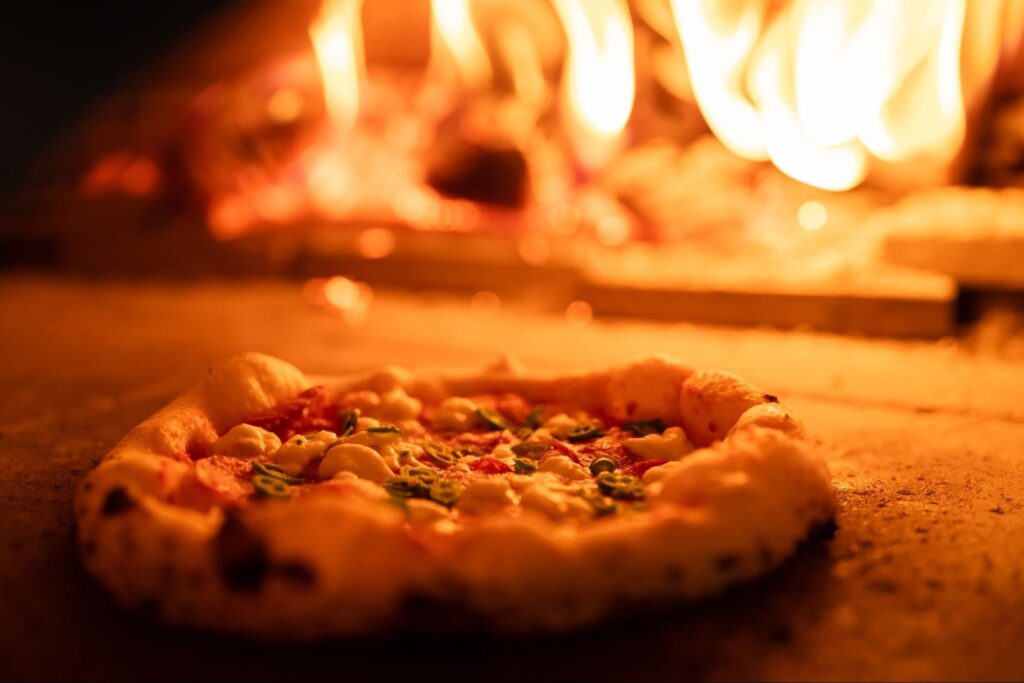
A well-designed pizza oven outdoor setup needs more than a powerful oven. It requires a safe location, a stable non-combustible base, effective ventilation and enough room to prepare, cook and serve food comfortably. For most garden cooks, a wood-fired oven creates the most rewarding experience, combining high temperatures, live-fire cooking and a distinctive smoky flavour.
Gas and electric models can be practical alternatives, but this guide focuses mainly on designing and installing a wood-fired setup that works safely and efficiently in your garden.
Where should you position an outdoor pizza oven?
The position of your outdoor pizza oven will affect safety, comfort and cooking performance. Before choosing an oven or building a base, study how people already move through your garden.
Start with level, firm ground. A patio, concrete slab or purpose-built foundation will usually provide a more stable surface than soil, gravel, or timber decking. The surface must support the combined weight of the oven, stand, chimney, fuel and any surrounding worktops.
Keep the oven away from fences, sheds, overhanging branches and other combustible materials. There is no single safe clearance that applies to every model, so follow the manufacturer’s installation instructions. This is particularly important for a wood-fired oven, which produces flames, sparks, smoke and intense radiant heat.
Think about the prevailing wind direction. Smoke should move away from your house, neighbouring properties and the main seating area. At the same time, the oven should not be placed in a completely enclosed corner where smoke and heat can accumulate.
Allow enough room in front of the opening for the cook to use a pizza peel without hitting furniture, walls, or guests. A long peel requires more working space than many first-time buyers expect. The cook should also be able to turn, remove and serve pizzas without crossing a busy garden path.
The best position is usually a well-ventilated area with a non-combustible surface, comfortable access to the house and enough surrounding space for safe cooking.
Which type of pizza oven is best for a garden?
The best pizza oven is not necessarily the one that reaches the highest temperature. It should suit your available outdoor space, preferred fuel type, cooking habits and level of experience.
Wood-fired pizza ovens
Wood-fired pizza ovens are the traditional choice. They use burning wood to heat the cooking floor and oven chamber, producing the high heat needed for a crisp crust, bubbling cheese and lightly charred toppings.
A wood-fired oven also creates a strong visual centre for an outdoor kitchen. Lighting the fire, managing the flame, and watching the pizza bake can become part of the entertainment.
However, wood-fired cooking requires practice. You need to learn how to build the fire, move it to the side, manage the temperature and recognise when the stone is ready. There is also more ash and soot to clean than with gas or electric models.
Dry fuel storage is essential. Some ovens are designed for hardwood logs, while others can use a wood pellet system. Never assume that an oven is suitable for pellets, charcoal or mixed fuel unless the manufacturer specifically approves it.
Gas pizza ovens
A gas pizza oven is faster to light and usually easier to control. Many gas-fired pizza ovens use a dial to adjust the flame, making them convenient for frequent weeknight cooking.
A gas-powered model can produce consistent results with less preparation, although it does not provide quite the same live-fire experience. Larger gas models may have two burners to distribute heat more evenly, but they also need more space and a properly positioned gas bottle or connection.
Electric pizza ovens
An electric pizza oven offers straightforward temperature control and does not require wood or bottled gas. It may suit a small garden, sheltered patio or household that values convenience.
For outdoor use, it needs access to a suitable outdoor socket. Do not use an ordinary indoor extension lead. A suitable extension should only be used where the oven manufacturer permits it and where the electrical installation is protected for outdoor conditions.
Although an electric model is convenient, it is still a high-temperature cooking appliance, not an outdoor version of an air fryer. It needs a stable surface, ventilation, and protection from rain.
Multi-fuel and portable ovens
Multi fuel pizza ovens allow the cook to switch between wood and gas. They offer flexibility but may cost more and include additional components that require storage and maintenance.
A mobile pizza oven can be a good portable option for a rented home, a small patio or a garden where the cooking area needs to remain flexible. A compact portable oven may arrive fully assembled and may have handles, but it should never be moved while hot.
| Oven type | Main advantage | Main limitation | Best suited to |
| Wood-fired | Traditional flavour and live fire | More preparation and cleaning | Enthusiastic garden cooks |
| Gas | Quick ignition and controllable heat | Less wood-fired character | Regular, convenient cooking |
| Electric | Simple temperature control | Requires safe outdoor power | Smaller, sheltered areas |
| Multi-fuel | Flexible fuel source | More components and higher cost | Cooks wanting several options |
What base does a pizza oven need?
The base must support the oven’s full weight, remain level and tolerate prolonged exposure to heat and weather.
A permanent masonry or concrete base is suitable for a large pizza oven outdoor setup. It can be designed with an open section for dry wood storage and a worktop for preparing dough. The foundation beneath it must be appropriate for the total load, particularly if the oven contains heavy refractory materials. If you’re planning to make a DIY project, you can find all the materials at Vitcas.
A modular metal stand is often sufficient for a smaller oven. Look for corrosion-resistant construction, a high weight capacity and a top made from a suitable non-combustible material. A sleek design may look attractive, but stability and heat resistance matter more than appearance.
Wheeled stands can make a portable oven easier to reposition. The wheels should lock securely, and the stand must remain completely stable during cooking.
The worktop should include space beside the oven for trays, ingredients and hot cookware. Avoid placing the main preparation surface directly in front of the opening, where it could obstruct access to the fire.
Include a heat-resistant landing area for a hot cast iron pan, roasting tray or pizza peel. If the oven can cook only one pizza at a time, a compact worktop may be adequate. A larger oven intended for three pizzas, bread, or roasting meats will require more preparation and serving space.
How should you arrange the cooking area?
A practical layout follows the natural cooking sequence:
- Store and organise the ingredients.
- Stretch and top the dough.
- Transfer the pizza to the oven.
- Turn and monitor it during cooking.
- Move the cooked pizza to a clean serving area.
Divide the setup into three working zones.
Preparation zone
This area should hold dough boxes, flour, sauce, cheese, vegetables and other toppings. Keep the surface dry and smooth so the dough does not stick while it is being shaped.
Position the preparation zone close to the oven. Ideally, the cook should be able to move a topped pizza from the worktop to the oven in one or two steps.
Hot cooking zone
The hot zone includes the oven opening, fuel access and the space used for handling peels and cookware. Keep heat-resistant gloves, the turning peel and thermometer within easy reach, but not so close that they become dangerously hot.
The area directly in front of the oven should remain clear. Guests may want to watch, but they should stand to the side rather than blocking the cook’s movement.
Serving zone
Use a separate clean surface for slicing pizzas, adding fresh toppings and serving food. This prevents cooked pizzas from being placed where raw meat or unwashed ingredients have been prepared.
An L-shaped layout works well in a spacious outdoor kitchen, while a straight worktop may be more suitable for a narrow patio. The important point is that the cook can move smoothly between preparation, oven and serving areas.
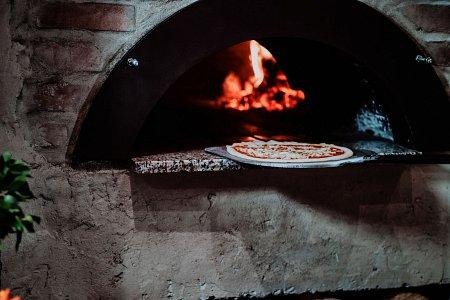
How should you plan shelter and ventilation?
A roof or canopy can protect the worktop from rain and make the space more comfortable. However, shelter must not trap smoke or restrict airflow.
Never install a wood-fired oven inside an unventilated shed, summer house or tightly enclosed structure. Any roof above the oven must be made and positioned in accordance with the manufacturer’s requirements for chimney height, overhead clearance and heat resistance.
Consider how rainwater will run from the roof. Water should not drip onto the oven opening, chimney, electrical equipment or preparation surface.
A fitted cover can protect the oven when it is not being used. Wait until the oven is completely cold before covering it, as trapped heat and moisture can damage finishes and encourage corrosion.
For wood storage, create a dry area raised above the ground. Keep only a small working supply near the oven. The main fuel store should be far enough away to avoid exposure to sparks and direct heat.
How do you install a wood-fired pizza oven outdoors?
Installation requirements vary, so always read the complete product instructions before starting.
1. Confirm the oven’s specifications
Check its weight, base requirements, ventilation needs and minimum clearances. Find out whether specialist lifting equipment or professional assembly is recommended.
2. Prepare the ground
The installation area must be level and capable of supporting the full structure. If you are building a permanent masonry base, make sure the foundation is suitable for local ground conditions.
3. Build or position the stand
Use a spirit level to check the base in several directions. A slightly uneven stand can make the oven unstable and may cause pizzas or pans to slide.
4. Place the oven safely
Large ovens can be extremely heavy. Do not attempt to lift one without enough people or appropriate equipment. Follow the manufacturer’s instructions for approved lifting points.
5. Fit the chimney or flue
Install all chimney sections in the correct order and use only compatible components. An incorrectly fitted flue can affect airflow and allow smoke to escape into the cooking area.
6. Check access and clearances
Make sure the oven door, fuel opening, chimney controls and handles remain accessible. Keep ventilation openings clear.
7. Protect nearby surfaces
Use suitable non-combustible materials where additional heat protection is needed. Decorative timber, ordinary plasterboard and thin metal sheets should not be treated as universal heat barriers.
8. Cure the oven if required
Some masonry and refractory ovens need to be cured with a sequence of small fires. This removes moisture gradually and reduces the risk of cracking when the oven later reaches higher temperatures.
Do not rush this process. Follow the recommended firing schedule for your particular oven.
9. Complete a controlled first firing
Start with a modest fire and observe the oven, base and surrounding surfaces. Check how the smoke travels and whether any nearby material becomes unexpectedly hot.
10. Review the working area
Before inviting guests, practise moving between the preparation surface, oven and serving zone. Remove furniture, plant pots or decorations that create an obstruction.
Common installation mistakes include placing the oven too close to a fence, underestimating its weight, building a roof before checking ventilation requirements and leaving too little room for the pizza peel.
Which tools are essential?
A practical pizza station does not need dozens of accessories, but a few tools are essential.
A launching pizza peel is used to slide the uncooked pizza onto the baking surface. A smaller turning peel helps rotate it during cooking so the crust browns evenly.
An infrared thermometer measures the surface temperature of the pizza stone without touching it. This is more useful for pizza than relying only on an air-temperature gauge, as the stone must be hot enough to bake the base quickly.
A digital thermometer is useful when cooking steaks, poultry, bread, or other thicker foods. It measures internal temperature rather than the heat of the oven floor.
You will also need heat-resistant gloves, a long-handled brush approved for the oven surface and safe storage for tools and flour.
Some pizza ovens include a rotating stone, which turns the pizza during cooking. This can reduce manual turning, but the cook should still monitor the crust and toppings closely.
How do you cook your first pizza?
Start by lighting a small fire with the recommended fuel source. Add wood gradually rather than filling the chamber immediately. This helps the oven heat evenly and gives you more control.
As the temperature rises, move the fire to the side according to the oven instructions. Allow the flame and stored heat to warm the cooking surface thoroughly.
Use an infrared thermometer to check the stone. The correct temperature depends on the oven, dough and pizza style, so follow the manufacturer’s guidance and adjust through experience.
Stretch the dough on a lightly floured surface. Avoid adding too much sauce, cheese or wet ingredients, as a heavily topped pizza can stick to the peel and cook unevenly.
Slide the pizza into the oven with a quick, confident movement. Turn it regularly so the side facing the fire does not burn.
Some manufacturers suggest that a pizza can cook in four minutes or less, but actual cooking time depends on the temperature, dough thickness and quantity of toppings. At very high heat, a thin pizza may cook much faster.
The first few pizzas cooked will help you understand where the oven is hottest. Aim for an airy crust, a crisp base and bubbling, oozy cheese without a burnt underside. With practice, you will achieve more consistent results.

What else can you cook in a wood-fired oven?
A well-designed setup should support more than pizza.
Once the oven temperature becomes more stable, use heat-safe cookware for roasting meats, cooking steaks or roasting vegetables. A preheated cast-iron pan can create an excellent sear, although it must be handled with extreme care.
As the fire weakens, the retained heat can be used to bake bread, cook tray dishes or slowly roast food. Pizza usually benefits from intense heat from the flame and stone, while meat and vegetables often cook better at a lower, steadier temperature.
This versatility is worth considering when choosing the perfect oven for your garden. A larger chamber may be useful for roasting, but it will usually need more fuel, more heating time and a stronger base.
How do you maintain an outdoor pizza oven?
Allow the oven to cool completely before cleaning it. Remove loose ash in accordance with the manufacturer’s instructions and brush the cooking surface with an approved long-handled tool.
Wipe external surfaces when cold and dry. Check the chimney, cover, seals and stand regularly for signs of damage, corrosion, or movement.
Keep wood dry and remove food residue from trays and pans after every use. If you have a gas model, inspect the hose and connections as recommended by the manufacturer.
The only downside of a permanent wood-fired setup may be the additional cleaning and weather protection it requires compared with some other pizza ovens. However, regular light maintenance is usually easier than dealing with accumulated ash, moisture, or corrosion.
Frequently asked questions
Does an outdoor pizza oven need to be covered?
A cover is useful for protecting the oven from rain and dirt, but it should only be fitted after the oven has cooled completely. Any permanent roof or canopy must allow proper ventilation and comply with the manufacturer’s clearance requirements.
Can a pizza oven stand on a wooden table?
Only if the manufacturer specifically approves that type of surface. Many ovens require a non-combustible, heat-resistant base. An ordinary garden table may not support the weight or withstand the heat.
Is a wood-fired or gas pizza oven better?
Wood-fired cooking suits people who enjoy managing a live fire and want traditional flavour. A gas pizza setup is quicker to light and easier to regulate, making it convenient for frequent cooking.
Are portable pizza ovens suitable for small gardens?
Yes, provided there is a level base, adequate ventilation and enough clearance around the oven. The cooking position should remain stable, even if the oven is normally stored elsewhere.
How much preparation space do you need?
Allow enough room to stretch dough, organise toppings and place a hot pizza after cooking. Even a compact oven benefits from a clear worktop beside it rather than directly in front of the opening.
A successful garden pizza oven setup begins with the site and workflow, not the appliance. Choose a safe position, build a stable base and leave enough room to prepare, cook and serve comfortably.