
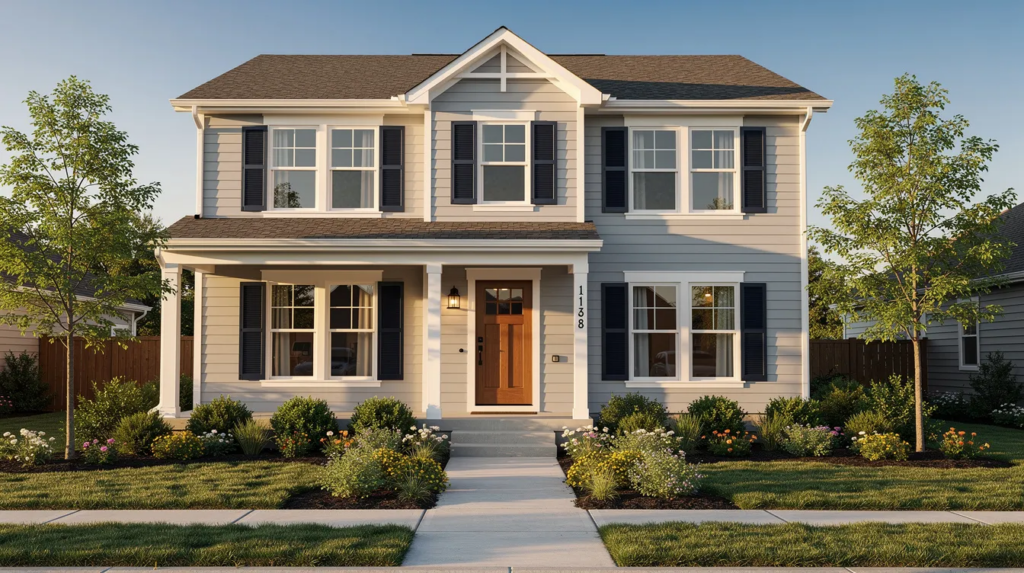
Some homes feel cared for before anyone reaches the front door. The trim is clean. The shutters fit the house. The siding works with the roof, windows, landscaping, fence, and deck.
Then there are houses that are technically fine, but something looks tired. Peeling paint around the doors. Faded window shutters. Dirt on the siding. A garage door that seems to belong to another house. Small things, yes. But people notice them.
That is why exterior house painting is not only about color. It is also about maintenance, protection, curb appeal, and the way the home’s exterior reads from the street.
Best Exterior Paint Colors Start With the Home’s Exterior
The best exterior paint colors are not always the ones that look good online. A Sherwin-Williams shade can look perfect in a photo and completely different on the house’s exterior. Light changes everything. Shade can make a color look flat. Full sun can make it sharper. Brick, stucco, vinyl, and painted wood all shape the way an exterior paint color looks in real life.
Soft white can make the home feel fresh without feeling too dramatic. Deep green, charcoal, or navy can add a more modern tone. Warm neutrals can calm the exterior when stone, brick, wood, or heavy landscaping is already creating texture and contrast. For example, a muted green can boost curb appeal without making the house look too trendy.
Before choosing an exterior paint color, it helps to check a few practical details:
|
What to check |
Why it matters |
|
Natural light |
The same paint color can look different in shade, direct sun, morning light, and late afternoon light. |
|
House materials |
Brick, stucco, vinyl, painted wood, roof color, trim, and shutters can all change how the color feels. |
|
Different sides of the house |
One side may be shaded most of the day, while another may get strong sun. The color should work on both. |
|
Painted samples |
Samples should be tested on the actual exterior, not chosen from a screen alone. |
|
Dry color |
Paint should be checked after it fully dries, because wet paint can look misleading. |
Inspiration can get the conversation started, but it should not finish it. Homeowners can explore the wider world of exterior paint colors, but samples still need to be tested on more than one side of the house, left to fully dry, and checked in different light. Morning, afternoon, and evening can all change the color. Testing takes time, but repainting takes more.
Exterior Paint Prep Is Not the Hardest Part
A fresh coat gets the compliments. The real work happens before the color goes on, and that preparation is critical. Exterior paint needs a clean, dry, sound surface. That can mean washing the house to remove dirt, mold, and debris before the final clean up. Loose paint should be scraped. Rough edges may need sanding. Exposed bare wood needs primer. Cracked caulk around windows and doors should be fixed before water gets behind the painted surface.
Rot, damaged trim, cracked siding, and small holes should not be painted over and called done. At some point, it makes more sense to replace damaged material than cover it with another coat. Paint can hide damage for a season, maybe less. It cannot strengthen bad material underneath.
The paint product still matters. High-quality exterior paint is formulated for better coverage, protection, and color retention. Premium materials can also reduce early fading and cracking. Satin or eggshell is often a good choice for siding because it is easier to clean. Semi-gloss usually fits trim, shutters, and doors. Flat finishes can work on older homes when the goal is to soften worn or uneven walls.
That is where painting work that supports a stronger first impression becomes practical. The job is not just to make the exterior look fresh. It should also help protect the house.
Color Experts Start With Trim, Doors, and Edges
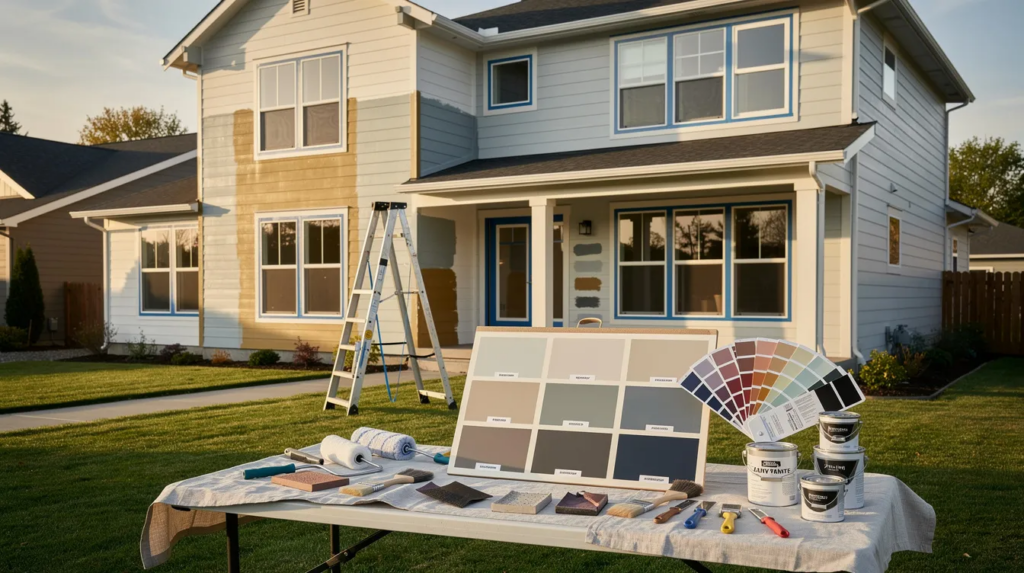
The main exterior color gets most of the attention, but trim, doors, edges, and the right tools often decide whether the project achieves a finished look.
Trim that is too bright can feel harsh. A front door that does not connect with the palette can look random. Window shutters in the wrong sheen can pull the eye for the wrong reason. Even small details, like uneven painter’s tape lines around trim or the wrong brushes for textured edges, can affect the final look. The same color also changes from material to material. Paint on brick does not read like paint on wood. Stucco has texture. Vinyl may limit some color choices.
Color experts usually start with the fixed elements: the roof, brick, stone, deck, windows, landscaping, and the home’s architectural style. One of the simplest tips is to let the palette respond to what is already part of the house. It is not about chasing one perfect color. It is about making the whole exterior feel connected.
Interior Walls Finish the Story
Once someone steps inside, the first impression either continues or falls apart. Fresh paint and freshly painted walls can make an interior feel put together almost immediately. The opposite is true too. Scuffs, peeling corners, old roller marks, and messy trim lines can make a room feel worn down, even if the furniture is doing its job.
Interior paint does not always need a bold move. Often, the better choice is quieter: repair the wall, pick the right sheen, repaint the trim, and keep the color close to what already works. A clean edge around doors and windows can carry the room better than an accent wall that feels out of place.
For homeowners preparing for buyers, renters, guests, or just a cleaner daily routine, interior painting that makes the room feel more intentional can help the interior feel finished without changing the layout.
A Maintained House’s Exterior Does Not Need to Look Perfect
Perfect is not the goal. Maintained is. Exterior paint that protects siding. Trim that looks clean. Doors that suit the style. Interior walls without obvious scuffs, holes, or patch marks. Colors that belong to the house instead of fighting it.
A good exterior paint job can last years when the surface is cleaned, repaired, primed, and painted in the right weather. The process can be time-consuming, which is why hiring experienced painters often matters for larger or weather-sensitive projects. Dry, mild days are best, and two coats often give stronger coverage than one.
When all those pieces work together, people may not notice every detail. They just get the feeling that the house has been cared for. That kind of first impression is hard to fake.