
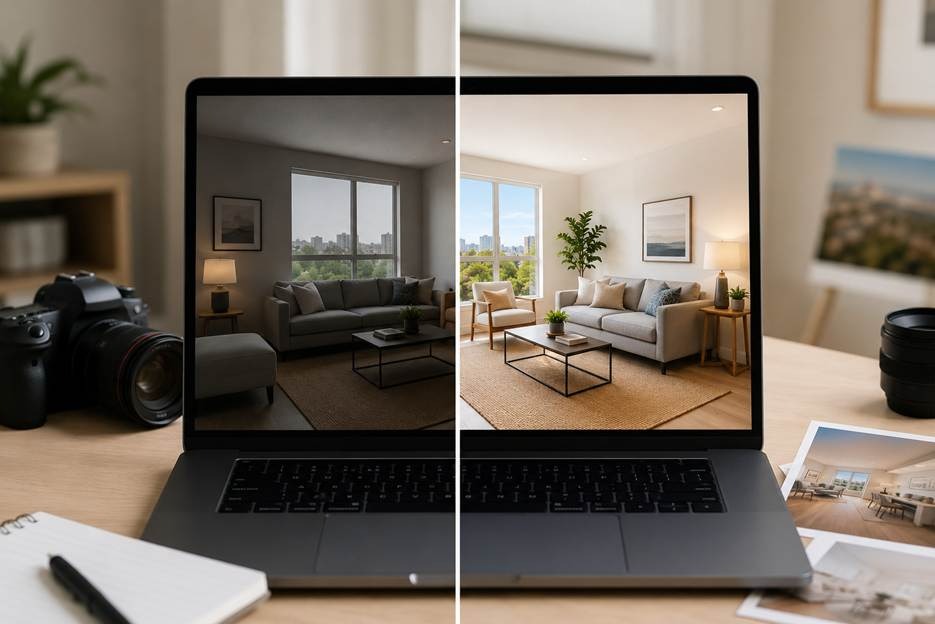
Some listings attract attention within hours while others sit quietly for weeks even when the price, location, and square footage look competitive on paper. In many cases, the only thing separating the two is how clearly the property is presented before buyers decide to take the next step.
Most buyers do not begin with a careful reading of the property description. They scan the photos and make a fast judgment: worth a visit, or not worth the time. That judgment depends on simple visual cues such as light, space, order, and flow. When those cues are weak, even a good property can feel less appealing online.
That is why strong listing photos belong at the center of property marketing. They do more than document a property. They influence clicks, showing requests, and the quality of buyer interest during the first days on market.
Why Listing Photos Are Your Most Powerful Property Marketing Tool
Online buyers compare homes quickly. They scroll through search results, open the listings that catch their attention, and skip the ones that feel unclear or poorly presented. In that short window, photos do much of the selling.
Before the listing copy, open house, email campaign, or social media post, the photos have already started the property marketing work. It all begins with the first image and if that image feels dark, crowded, or confusing, the listing starts with a handicap.
Good photos answer practical buyer questions. How large does the room feel? Where would the sofa or bed go? Does the home feel clean? Does the layout make sense? These are the determining factors behind whether a buyer keeps looking, saves the listing, or moves on to the next property.
A strong photo set gives the rest of the campaign a better starting point. Price, location, and condition still matter, but poor visuals force the listing to recover from a weak first impression. In property marketing, that lost attention is hard to win back.
What to Do Before the Photographer Arrives
The greatest listing photos often take shape before the camera leaves the bag. Preparation costs little, but it changes how every room looks on screen.
Before the shoot, look for anything that interrupts the room’s story. A crowded counter suggests limited storage. A chair in the wrong place makes a walkway feel tight. Cords, bins, paperwork, pet items, and small personal objects distract buyers. The room does not need to look unused. It needs to look intentional, calm, and simple enough for buyers to understand in a few seconds.
Personal items also need attention. Family photos, children’s names, private documents, and highly specific collections remind buyers that they are looking at someone else’s home instead of imagining it as their own. The space should still feel lived in, but not so personal that it becomes harder for buyers to connect with it.
Natural light should get the same practical check. Open curtains and blinds before the shoot, clean any window that sits in a main photo angle, and replace burned-out bulbs. Different bulb temperatures can also make a room feel visually inconsistent. A room looks less polished when one side feels yellow and the other side feels blue.
After that, test the rooms from the buyer’s view. Stand where the photographer will likely stand: the doorway, the main corner, or the cleanest sightline into the room. Small distractions become easier to spot from those positions. Moving them before the shoot turns photo prep into a repeatable property marketing routine, not a last-minute cleanup.
How Lighting and Composition Influence Buyer Perception
Lighting changes how a home feels in photos. Bright, even light makes rooms feel open and cared for. Dark corners, harsh shadows, and mixed bulbs make the same rooms feel smaller or less inviting.
For interior photos, the angle should explain the room. A wide-angle lens helps in tight spaces, but too much distortion makes walls bend and furniture look unnatural. A good listing photo shows size, layout, windows, and flow without stretching the room beyond reality.
Composition matters for the same reason. Doors, windows, furniture, and walkways should help buyers understand how the home works. A poor angle hides the best part of a room or makes the layout feel like a puzzle with missing pieces.
Exterior photos deserve the same care. The front image often sets the tone for the full listing. In some cases, day-to-dusk editing gives the exterior a warmer feel while keeping the property accurate. In other cases, a clean daylight image with balanced shadows and clear architectural details does a better job of presenting the home honestly and clearly.
AI Tools That Bring Every Listing Photo to a Professional Standard
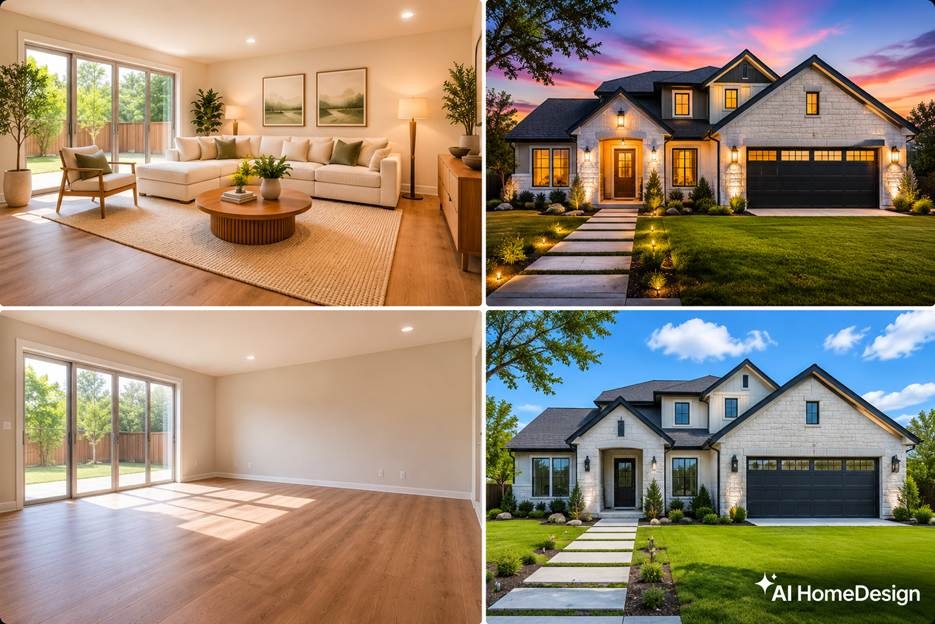
Not every agent has the budget for full staging, advanced editing, and a professional retouching team. AI tools have made many photo preparation tasks easier to access, especially when a listing needs to move quickly.
Modern real estate photo editing tools help correct exposure, improve dull skies, remove small visual distractions, and enhance lighting. These edits help photos look closer to how the property feels in person. The line is simple: improve presentation without misleading buyers.
AI also helps with vacant or sparsely furnished rooms. Empty rooms often flatten in photos. Without furniture as a reference point, the space can look smaller, less useful, or harder to understand than it really is. For these situations, ai virtual staging for real estate enables agents to upload a room photo and present a furnished version without renting furniture or managing a physical staging schedule.
This use of virtual staging works well for vacant homes, new builds, investment properties, and rooms with an unclear purpose. It also helps occupied homes when one room looks underused or poorly arranged, as long as the final image does not hide the property’s real condition.
AI real estate photography works best when agents treat it as editing support, not a shortcut around good judgment. A useful edit makes the photo clearer, cleaner, or easier to read. A poor edit changes the buyer’s understanding of the property. The strongest results come from good preparation, smart shooting choices, and careful real estate photo editing.
Turning Listing Photos Into a Faster, Stronger Marketing Campaign
A finished photo set should support the full campaign, not only the MLS page. Strong images belong on listing platforms, social posts, email campaigns, paid ads, flyers, and buyer follow-ups.
The sequence of images also affects how buyers move through the listing. Lead with the strongest exterior or main living area. Then move through the rooms buyers care about most, such as the living room, primary bedroom, bathrooms, the kitchen, outdoor areas, and special features.
For social media, a small group of high-impact images often works better than the full gallery. For email, the strongest image should appear near the top. For investor or seller audiences, choose photos that explain condition, layout, and potential.
At this stage, the photo set becomes the working material for the entire property marketing campaign. A good photo set gives every channel stronger material. The same images support search visibility, buyer interest, follow-up messages, and open house promotion.
Good listing photos may not sell a property by themselves, but weak photos make the campaign carry a heavier load. Agents who treat photo preparation as a property marketing decision give each listing a higher chance to earn attention early, attract serious buyers, and avoid the slow slide toward price reductions.