
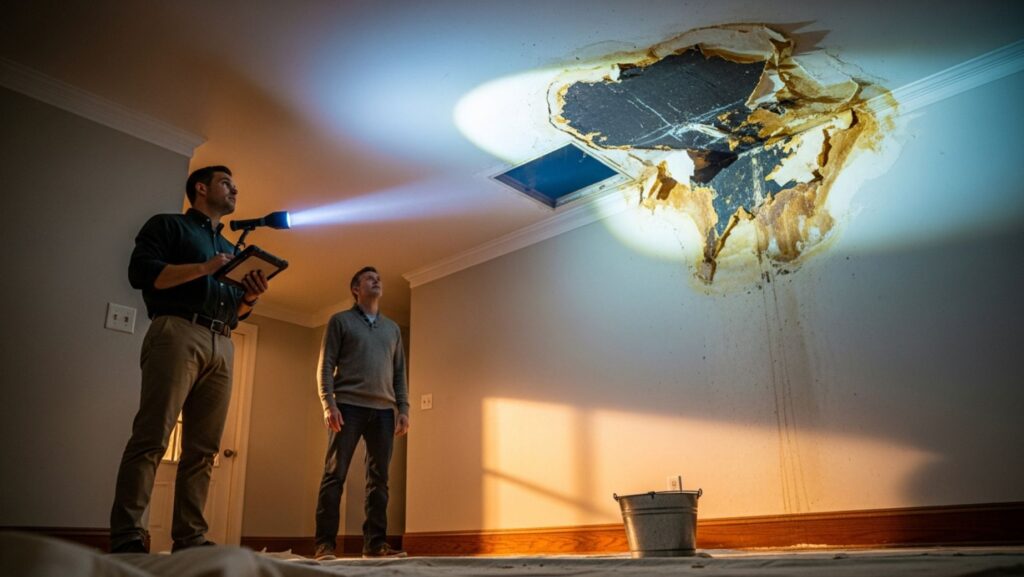
There are few sights more dreadful for a homeowner than a dark, ominous stain spreading across the ceiling. This moment immediately triggers a cascade of worries, but one question rises above them all: Will my insurance cover this? Unfortunately, it’s seldom a straightforward yes-or-no answer. Coverage for a leaking roof is one of the most common points of confusion and contention between homeowners and insurance companies. The key to understanding your potential coverage lies in a critical distinction that insurers make—the difference between damage that is sudden and accidental versus damage resulting from gradual wear and tear or maintenance neglect.
This article will demystify the claims process by explaining how to interpret your policy, what insurance adjusters look for when investigating a claim, and what steps you can take to prepare for filing. Understanding this process is more important than ever, as statistics show it’s a common concern for many. In 2023, 5.3% of all insured homes in the U.S. filed a claim, making the possibility of needing to navigate this system a reality for millions of property owners.
Decoding Sudden and Accidental in Your Insurance Policy
The language in your homeowners’ insurance policy is dense and specific, but the phrase sudden and accidental is the cornerstone of coverage for most roof leak claims. Understanding what your insurer means by these words is the first step in setting realistic expectations for your claim.
What Sudden and Accidental Means
In insurance terms, these words have precise definitions. Sudden implies an event that is not gradual; it happened quickly and at a specific, identifiable moment. Accidental means the event was unforeseen and unexpected. Your policy is designed to protect you from these types of abrupt, calamitous events. Clear examples of covered perils that fall under this rule include a healthy tree branch crashing through your roof during a storm, powerful winds tearing off a section of shingles, or hail creating holes and punctures. These events are so common that wind and hail are the leading causes of property damage claims, accounting for 38.9% of all claims, which is why this coverage is so critical.
Common Exclusions: Gradual Damage and Maintenance Neglect
What your policy typically does not cover is damage that happens over time. Remember, a homeowners insurance policy is not a home warranty or a maintenance fund. It is designed to cover unforeseen disasters, not the inevitable decay of building materials. Examples of excluded scenarios include a slow drip from old, cracked flashing that has been leaking for months; shingles that are well past their 20-year lifespan and have been deteriorating for years; or damage from ice dams that form because of perpetually clogged gutters. Insurers are becoming stricter about this distinction. Recent trends show that some companies are re-categorizing common damages, such as certain types of water or winter-related issues, as problems of negligence to avoid paying out claims.
A Crucial Distinction: Resulting Damage vs. The Source of the Leak
Here is a critical nuance that trips up many homeowners: a policy will often cover the damage caused by the water but not the cost to repair the source of the leak if it’s determined to be a maintenance issue. For example, imagine an old, worn-out pipe in your attic finally bursts. Your insurance company may agree to pay for replacing the soaked drywall, ruined insulation, and damaged flooring below. However, the cost of hiring a plumber to access and replace the old, corroded pipe itself would likely fall to you, the homeowner, as that is considered a maintenance responsibility.
How Insurance Adjusters Pinpoint the Root Cause of a Leak
When you file a claim, your insurance company will send an adjuster to investigate the damage and determine its cause. Their findings will be the primary factor in whether your claim is approved or denied. Knowing what they look for can help you understand the process and prepare your own evidence.
The On-Site Investigation Process
When an adjuster visits your property, you can expect a thorough inspection. They will typically examine the roof’s exterior to check the condition of the shingles, flashing, and vents. They will also likely need to access your attic space to look for signs of water intrusion, mold, or rotted wood. Finally, they will document the interior water damage on your ceilings and walls. During this process, they are looking for specific clues that distinguish sudden damage from gradual deterioration.
- Signs of Sudden Damage: The adjuster will look for missing shingles with clear tear marks from wind, obvious impact craters from hail, or structural damage from a fallen object like a tree limb. These are clear indicators of a recent, accidental event.
- Signs of Gradual Damage: Conversely, they will note red flags like curled, cracked, or brittle shingles across the entire roof, widespread granule loss that indicates old age, and the presence of mold, mildew, or algae in the attic. Soft, rotted roof decking is another telltale sign of a long-term moisture problem that will almost certainly lead to a denial.
Your Role in the Claims Process: How to Prepare Your Evidence
The evidence you collect can play a major role in how your claim turns out. Do not simply wait for the adjuster to make a determination; be proactive in documenting your side of the story. Taking these actionable steps can put you in a much stronger position.
- Document Immediately: The moment you notice the leak, take extensive photos and videos. Capture the damage inside your home, in the attic, and on the roof (only if it is safe to do so). Time-stamped photos are especially powerful.
- Prevent Further Damage: Your policy requires you to take reasonable steps to mitigate further loss. This can mean placing buckets to catch drips or putting a tarp over the damaged area of the roof. According to claims guidance issued by insurers during major storms, keeping receipts for any temporary repair materials is crucial, as these costs are often reimbursable.
- Gather Maintenance Records: Collect any invoices or records of past roof inspections, repairs, or full replacement. This documentation can serve as powerful evidence that you have been properly maintaining your property.
- Note the Timeline: Write down the exact date and time you first discovered the leak. If it appeared right after a major storm, note that as well. This helps establish the sudden nature of the event.
- Review Your Policy: Locate your homeowners insurance policy documents. Having them on hand allows you to reference the specific terms related to water damage and roof coverage when speaking with your insurer.
The Danger of Misclassification
Unfortunately, claims are sometimes unfairly denied when an adjuster misclassifies the cause of the damage. For instance, legitimate storm damage might be incorrectly labeled as pre-existing wear and tear, or wind damage could be dismissed as the result of improperly installed shingles from years ago. This is not just a hypothetical concern. There have been major legal battles, such as those involving State Farm, where homeowners alleged the company trained adjusters to systematically deny valid hail damage claims by attributing the damage to pre-existing manufacturing defects or installation issues. These cases underscore why having your own detailed documentation is your best defense against an unfair assessment.
What to Do When Your Roof Leak Claim Is Denied
Receiving a denial letter from your insurance company can be disheartening, but it doesn’t have to be the end of the road. Understanding why claims are denied and knowing the steps to challenge a decision are essential for any homeowner.
Common Reasons for Claim Denials
Insurers deny claims for several common reasons, most of which tie back to the policy’s exclusions. These include citing a lack of maintenance, attributing the damage to general wear and tear, determining the source of the damage is not a covered peril (like flooding), or stating that the claim was filed too late. It’s important to know that initial denials are not rare. For instance, after severe weather events in Houston in 2024, it was reported that nearly 68% of property claims were initially denied.
Challenging an Unfair Denial or Lowball Offer
The first no from an insurer is not always the final answer. If your claim is denied or you receive an offer that is too low to cover the repairs, you have the right to challenge the decision. The first step is to request the exact reason for the denial in writing, citing the specific language in your policy that the insurer is using to justify their position.

Next, gather your own estimates from at least two reputable, licensed contractors to establish a realistic cost for the repairs. You can then write a formal appeal letter to the insurance company, presenting your evidence and contractor estimates. If negotiations stall or the denial seems unjust, consulting with a property damage insurance claim lawyer can provide the expertise and leverage needed to challenge the insurer’s decision effectively.
Comparison Table: Appealing a Claim on Your Own vs. Hiring a Professional
When facing a denial, you can choose to manage the appeal yourself or hire a professional. This table breaks down the differences between these two approaches.
| Action | Doing It Yourself (DIY) | Hiring a Property Damage Lawyer |
| Policy Interpretation | Relies on your own understanding of complex legal text and exclusions. | Provides expert interpretation of policy language, endorsements, and relevant state laws. |
| Evidence & Assessment | You are responsible for collecting all photos, reports, and repair estimates. | Can guide you on crucial evidence and may engage independent experts (engineers, roofers) to build a detailed evidence file. |
| Negotiation with Insurer | You negotiate directly with a professional insurance adjuster trained to minimize payouts. | Handles all communication and negotiation, leveraging legal expertise and the threat of litigation to secure a fair offer. |
| Potential Outcome | May accept a lowball offer due to pressure or lack of knowledge of the true claim value. | Aims to secure a full and fair settlement that covers all legitimate damages according to the policy. |
| Legal Escalation | Filing a lawsuit is a complex, costly, and time-consuming process to navigate alone. | Is fully prepared to escalate the claim to litigation if the insurer continues to act in bad faith. |
Preventing Denials Before They Happen
The central theme is clear: whether your roof leak is covered depends almost entirely on its cause. Therefore, the best way to ensure a successful claim is to prevent the types of problems that lead to automatic denials. This aligns perfectly with a proactive approach to home improvement and seeking expert advice to protect your investment. The most effective strategy is diligent maintenance. This includes scheduling regular roof inspections (at least once a year), keeping gutters clean to prevent ice dams and water backup, and promptly addressing minor issues like a cracked shingle or damaged flashing before they escalate into a major leak.
By understanding your policy, diligently maintaining your property, and thoroughly documenting any damage that occurs, you place yourself in the strongest possible position to get the coverage you’ve been paying for. An informed and prepared homeowner is an empowered one, ready to navigate the claims process with confidence and secure a fair outcome.