
Table of Contents
ToggleYou can spend an exorbitant amount of money on a kitchen renovation, only to find it simply uninhabitable within a couple of years. And almost always, this is the result of the same mistakes: over-customization, a choice of materials driven by fashion trends, and a design optimized for a single moment rather than for long-term use.
The remedy seldom requires another complete refurbishment. Some of the most effective kitchen modifications are shockingly simple: a flawless butcher block kitchen island placed in a room full of hard surfaces, under-cabinet lighting finally installed, and hardware replaced with something that genuinely feels nice to touch. Small choices are amplified. Kitchens that are really pleasant to live in on a daily basis have a few subtle characteristics that have less to do with finances and more to do with judgment.
What Over-Customization Actually Costs You
A kitchen that really expresses a person’s taste may be distinguished from one that has been altered to the point that it no longer serves as a neutral, usable area. Over-customized kitchens have a certain vibe: everything is extremely planned, highly precise, and yet draining to be in. The backsplash is a statement. The cabinets are a statement. The countertops are a statement. At some point, the room stops being a kitchen and starts to feel like a gallery, and nobody actually wants to cook in a gallery. That is where material choices matter.
According to Bellus, a kitchen countertop supplier in Singapore, the best kitchen surfaces balance beauty with function, helping countertops, backsplashes, and finishes feel intentional without overwhelming the space.
The Problem With “Wow Factor” Design
The remodeling business is involved in marketing spectacular makeovers. Dramatic makeovers provide for stunning photographs, increase interaction, and justify huge charges. What they don’t always produce is a kitchen that functions effectively. Functionality consistently outranks aesthetics among homeowners who finished kitchen improvements, while the majority have favored aesthetics throughout the planning process.
The kitchens with the lowest “wow factor to livability” ratio have many characteristics: layouts that sacrifice efficiency for visual drama, statement materials that need ongoing maintenance, and design choices that become claustrophobic after six months.
Why Material Choices Age Faster
Poor material selections in kitchens are divided into two categories: those that decay physically and those that degrade culturally. Both are worth considering, and both are more prevalent than they should be.
Physical degradation is the obvious one. Laminate that bubbles at the edges; tile grout that discolors within a year.; cabinet finishes that chip unevenly. These are the results of prioritizing upfront cost or visual appeal over material integrity.
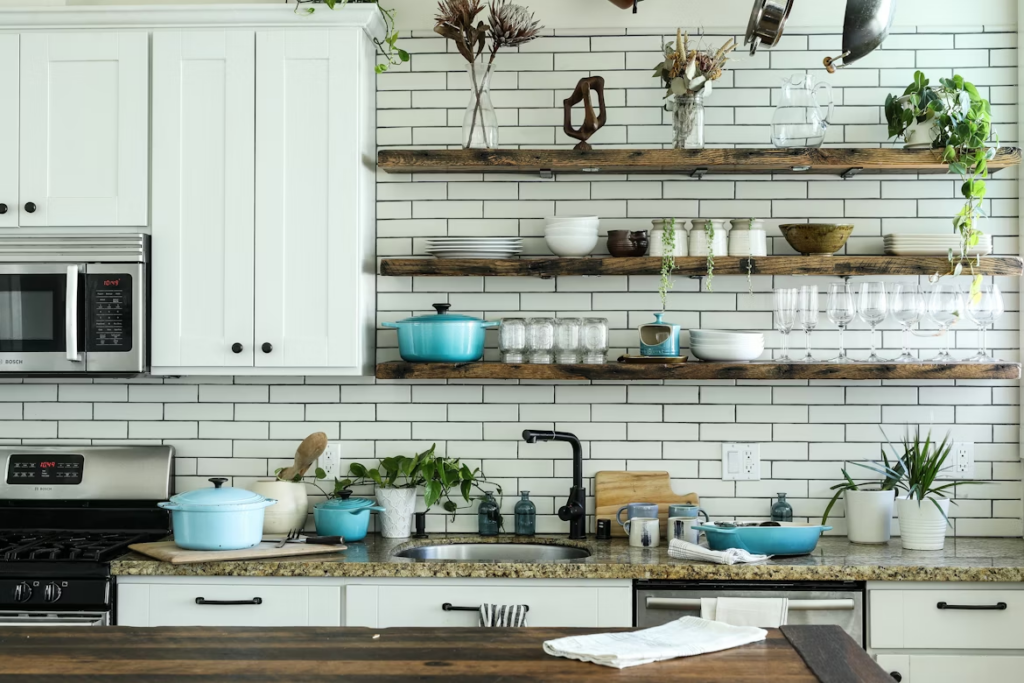
Cultural degradation is subtler and arguably more damaging to a kitchen’s long-term feel. This is what happens when a design is too legibly tied to a specific moment in time. Chevron tile patterns. Open shelving styled with matching ceramic canisters. Industrial pipe fixtures. Each of these had a peak moment, and now they read as a timestamp.
The materials and finishes that hold up best over time don’t announce themselves. They have a quality or warmth that feels considered rather than current. Natural stone that varies slightly from slab to slab. Matte finishes that don’t compete for attention. These are the surfaces that stop mattering in the best possible way. They become background, the way a good room always should.
The Case for Warm Wood in a World of Cold Surfaces
Wood in a kitchen makes people instinctively nervous. It scratches. It can warp. It needs maintenance. But none of it is actually a reason to avoid it. The question isn’t whether a material requires care. It’s whether that care is proportionate to what the material gives back.
What warm wood elements give back, specifically, is texture and life. With a wooden surface the room shifts. It becomes easier to be in since humans involuntarily respond to organic materials.
And some of the most successful treatments are quite small:
- Open wood shelf instead of a single top cabinet run – especially useful in kitchens that appear closed-in or too symmetrical;
- Wooden drawer inserts and organizers are undetectable to visitors but instantly obvious to anybody who uses the kitchen on a regular basis.
In addition, switching from a laminate island top to a solid wood surface changes the area’s overall focal point. All-painted kitchens lack the layered visual depth that may be achieved by adding a wood panel to the side of a refrigerator cabinet or covering a kitchen island with a warm-stained wood veneer.
Final Say
The most useful frame for any kitchen upgrade is probably this: will this choice look better in five years, or worse? Most trend-driven decisions fail that test fairly quickly. Most quality material decisions pass it.
Warm wood, good lighting, hardware with actual weight to it, surfaces chosen for how they feel underhand rather than how they render in a photo – these are the upgrades that compound quietly. They don’t make a dramatic statement in year one. They make a kitchen feel like home in year four, and year seven, and year ten. That’s a harder thing to photograph, but a much better thing to live with.