
Key takeaways
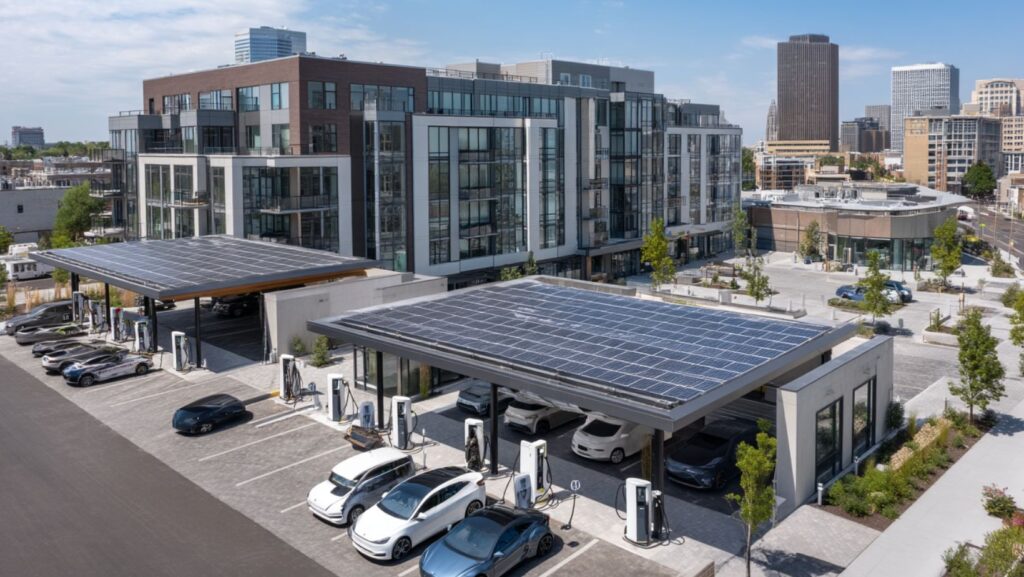
Integrated solar and EV charging can boost property value, reduce energy costs and attract more and better tenants.
Planning capacity, layout and expansion of power tend to provide better ROI than making charging an afterthought.
Tax credit programs and other available incentives can cover a percentage of upfront costs for commercial properties.
Smart software, simple rules, and easy pay-as-you-go pricing make your charging station reliable, fair and easy to manage.
Why Solar + EV Charging is Important to Your Property Value
If you own or manage commercial real estate, you don’t need to be informed that you can feel the shift. More and more staff, visitors and residents are driving an electric and they silently assess the quality of your parking lots the second they step out of their vehicles. No charging station or a broken one sends the message.
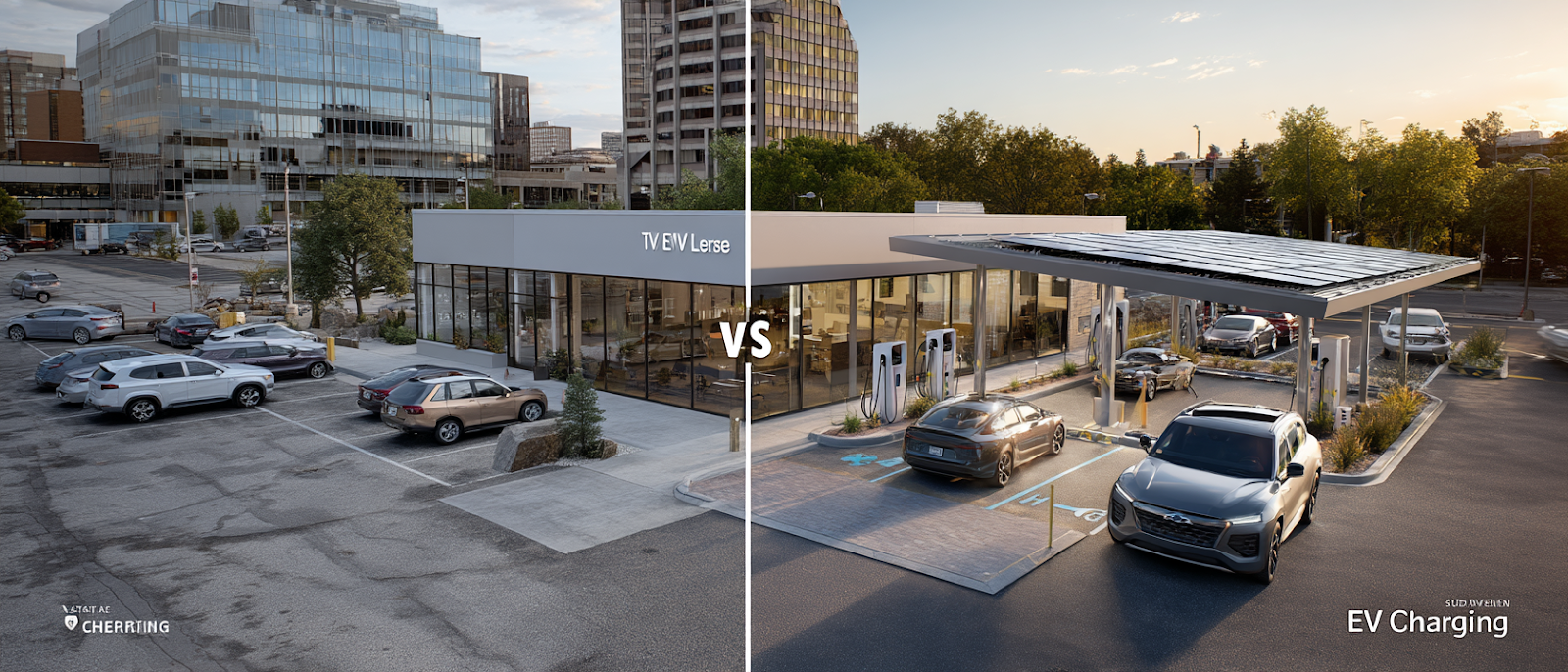
When you combine solar with EV charging, you do more than put up an amenity. You divine that your building is ready for where transport and energy is going, as opposed to where it used to be. I worked with a Class A office where one major tenant made its lease renewal dependent on on-site charging. We added solar carports in addition to a very small bank of networked chargers. That one decision helped to both win a lease extension for several years and strengthened the marketing narrative around the building.
You are not only chasing trends. You are preserving future rent, occupancy and exit value.
Understanding Integrated Solar Charging and EV Charging Systems
Think of an integrated system as you having one energy ecosystem working for your building, your tenants and their vehicles. On the generation side, you have solar panels on the roof or over parking lots. On the load side, you have the building, the lighting, the HVV and of course your charging station hardware.
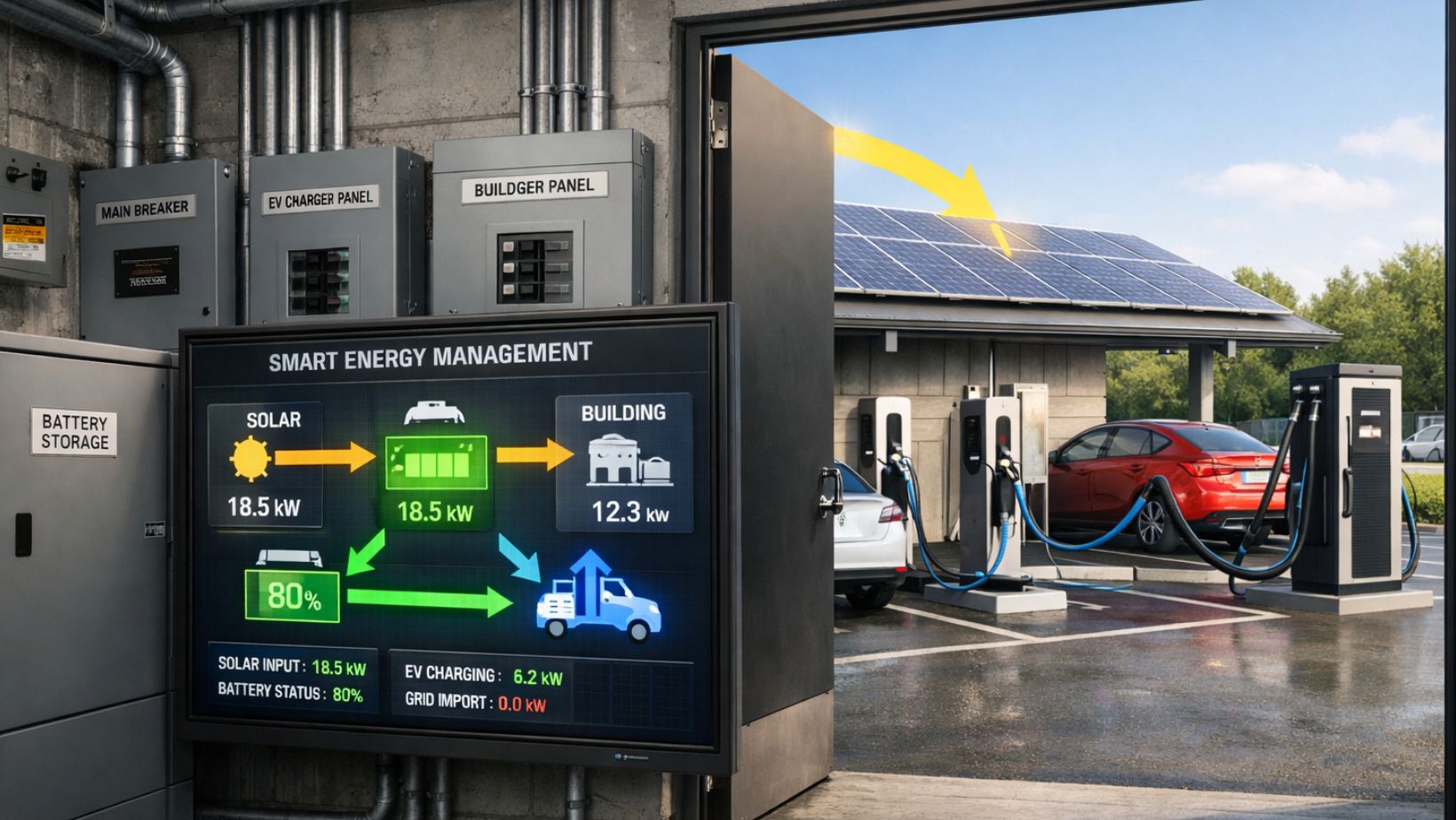
During hours of sun, the building is fed first, followed by the chargers, and if excess is available, this could return back to the grid where net metering is available. During the night or times of cloudiness the grid bears more of the load. The value comes from being able to match when your solar is making with when people actually plug in.
Like I like to draw for clients on a whiteboard. Once they see the flow, the concept of separate projects on solar and EVs cease to make sense. One plan, one electrical backbone, monitoring one, less surprises.
Most Beneficial Key Property Types
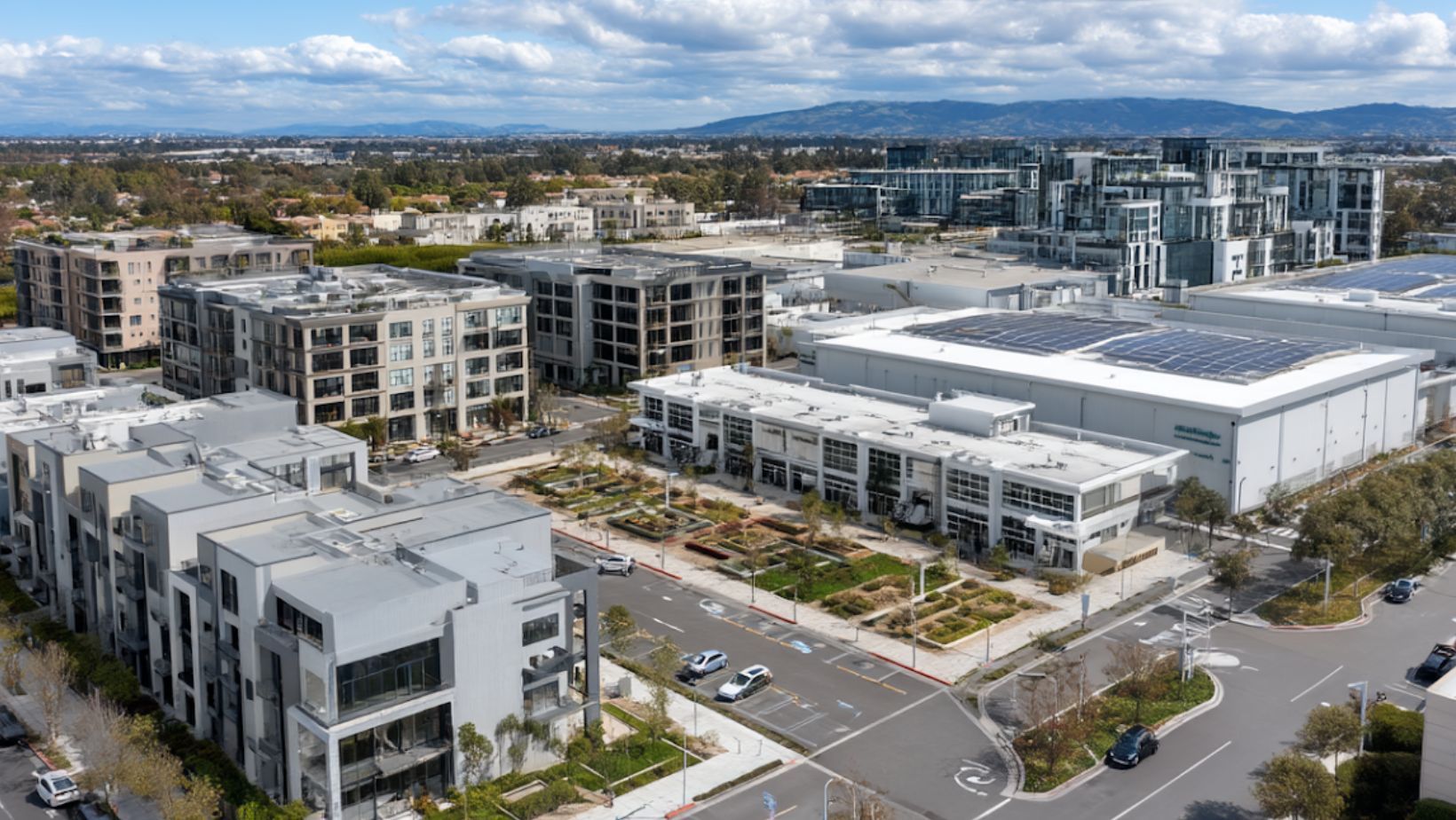
Not every site requires the same set up but there are clear gains for several commercial properties. Multifamily communities are using charging as a differentiator. In the case of a 160-unit multifamily, I observed the addition of 12 smart chargers plus a small solar. Within one year, they reported that they were reporting faster lease ups and fewer residents moving out for “more modern” buildings.
Office and mixed-use sites employ charging for employee commuting as well as the visitation of their clients. Retail centers and hotels use it to make people stay longer. A highway hotel that I advised on, added a small solar carport and few Level 2 ports near the entrance. Management, on the other hand, noticed guests choosing them over a competitor across the street with no charging.
The U.S. Department of Energy’s Alternative Fuels Data Center, provides you with a good source you can reference for this point. It allows your reader to confirm the claim with a document he or she may check.
Industrial and logistics properties are beginning to charge light-duty fleets during the day on-site, where solar can replace some of this new load.
Financial Benefits: Revenue, Savings and Incentives
From a pure numbers point of view, you have three buckets: new revenue, less operating costs, and incentives. Charging can generate some revenue in the form of charging of session fees, pricing by kWh or charging for monthly access for tenants. It will not replace rent but it could service electricity and maintenance, with some margin.

Solar flattens your common area energy bill as well as dampens the effect of rising rates. If you then pair it with smart charging profiles, you can avoid naughty demand spikes. I worked in a small shopping center that utilized software to spread out the charging process during times of high usage. Their demand charges dropped enough to materially improve annual ROI.
Then you’ve got the tax credit for solar and different things for the hardware for EV from utilities and governments. Many commercial property owners tend to underestimate how much of the upfront costs these can cover.
A Guide to Federal Investment Tax Credit for Commercial Solar Photovoltaics provides you with a good source you can reference for this point. It allows your reader to verify your claim by looking into a document that he can check.
Planning Your Integrated Solar + EV Charging Project
Before you start idealising anything, hang back and ask yourself some blunt questions. Who will be using the chargers in year one, who will be using them in year five? Residents, employees, fleet vehicles, public? That determines how many ports you need now, as well as how much conduit you need to rough-in for later.

Next, consider the property’s electrical capacity. Is there sufficient space in the existing switchboard, or will an upgrade be required? A site walkthrough with a qualified electrician and solar designer can identify capacity constraints before they become expensive changes during installation. Where the distribution system needs to support higher current loads, a copper busbar may be incorporated within an upgraded switchboard to distribute power efficiently across the solar system, EV chargers, and other building loads. I have seen projects where relocating chargers by 40 feet at the planning stage saved property owners thousands of dollars in trenching and cabling costs.
Check local codes too. Some cities have already made a percentage of spaces to be EV-ready in new commercial places a requirement. Planning for that now ensures that you are beating the regulators to the punch, rather than scrambling around later.
Technical Design: Making Solar and EV Charging Partner
Design is where not to be flexible vs. get boxed in. Try starting with an estimation of your current load or building at some stage, add projections of charging demand on top of it. For a small office, that may be a few level 2 ports for people who park all day. For a retail location, you may want to have faster turnover with a number of chargers near entrances.
This is also where you choose whether or not dc fast will make sense or if it will just start to run up demand charges you will not value. Many places do better with a greater number of Level 2 units, and decent signage, than one oversized fast unit.
It is energy management software that ties it all together. It is able to throttle power across multiple chargers, prioritize particular users and time charging to match solar production. You do not need to have a perfect system on day one but you should at least leave space where you can integrate storage in the future if your load grows.
The Role of Professional EV Charging Station Installation
Sometime around the middle of the project, the conversation tends to transition from “what” to “how.” This is where professional EV charging station installation becomes critical. I have walked in sites where a handyman put finger in the incorrect place on conduit wiring, and the owner paid twice to fix it.
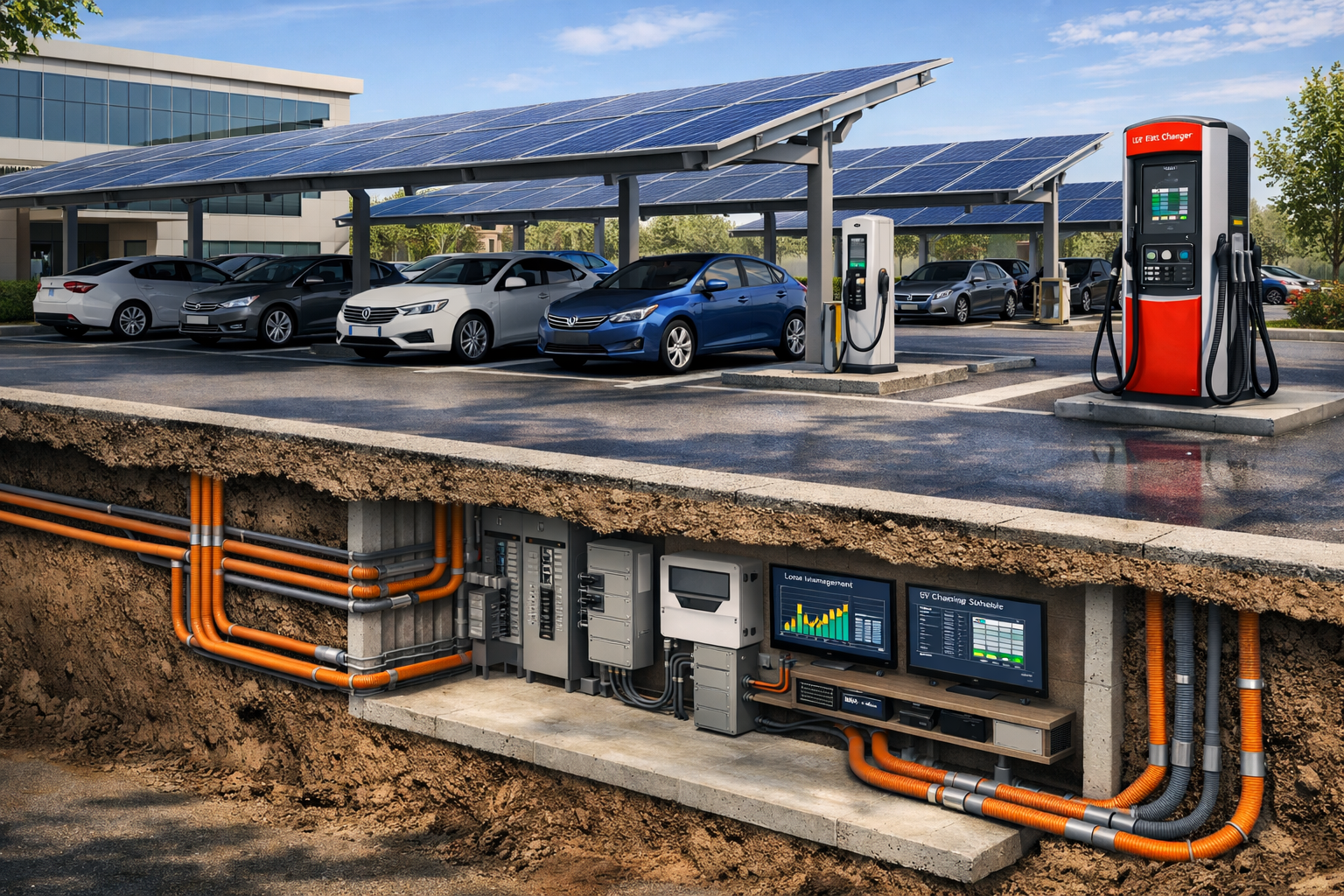
A properly constructed team will map out your parking, panels and future phases before hammering in the first shovel. But they will coordinate trenching, wiring, networking, and commissioning, so that the chargers can talk to your software from day one. The same goes for solar. When both trades work together you don’t have duplication of work or awkward placement of equipment.
During EV charging station installation, ask to see load calculations and one-line diagrams. You do not need to read every symbol, but you should know someone’s thoughts through the growth and safety and the inspecting.
Operations, Maintenance and User Experience
Once all is live, the boring part begins and that is where so many projects are silently struck out. And if a charger is down, tenants remember. If the pricing is random, as they perceive it, people complain. So you need a simple plan.
Provide for periodic checking up for both solar and chargers. Most current systems have remote monitoring but someone must take actions in response to alerts. Decide who can park in parking spaces charging, how long and what to pay. Put those rules on signs and in leases/building handbooks.
I like to stand in front of a new charging station and say, “If I had never used electric vehicle charging before, would I know what to do?” Clear labels, basic instructions, and a support phone number will go a long way.
Marketing and Leasing Benefits
From a leasing perspective, Solar and EV charging is not just a technical upgrade. They are a story you can tell. Prospective tenants need to know how your building will support their sustainability goals, staff commuting and client experience.
Highlight your charging station and solar in your marketing materials, tours and online listing. For real numbers show: how many kWh delivered, how much emissions were estimated to be avoided or how many ev drivers use the site each month. One office landlord I worked with began putting a one-page “clean energy” snapshot in leasing decks. It gave them a talking point that they had competitors lacked.
You are not saying ‘we care about sustainability.’ You are demonstrating it through infrastructure, in-full view infrastructure.
Risks and Challenges and How to Avoid Common Mistakes
There are real pitfalls. The most common one I see is under civilization work. Trenching across finished asphalt or concrete in a public parking is no inexpensive task. Layout can save a big buck later by doing just a small change to a layout on paper.
Another problem is short term thinking. Having simply two chargers with no additional conduit could be safe at this time, but as the adoption of EVs money rises, you will pay more to retrofit. Pricing can also backfire. If you distribute electricity, the non-EV tenants can feel that they are subsidizing others. If you overcharge, the equipment lays around empty.
Grid constraints matter too. The uncontrolled fast charging may induce steep demand charges. With a little planning and software control, your ROI will be prevented from eroding silently in your utility bills.
Real World Examples and Case Studies
Let me give a few quick snap-shots. An example of a suburban multifamily property adding 75 kW of solar and 10 networked chargers to a property with 140 units. Within 18 months they claimed to see increased rates of renewal and use them in securing up-value at refinance by the amenity.
An office campus that I advised had a global tenant that was pushing hard on sustainability. We assisted them in combining solar carports and workplace charging. That project became a central issue in their negotiations to extend their lease and helped the landlord to promote the site as a regional flagship.
A neighborhood retail center set up a little package of chargers near a coffee shop. Management later noticed customers keeping longer and spending more money. It was not dramatic from night to night but over the course of a year the pattern was sufficiently clear that they planned for a second phase.
Step-by-Step Roadmap to Get Started
If you are after a path of simsies, then here is the way that I usually frame it. First, clarify your goals. Are you trying to increase property value, provide for a key tenant, achieve internal sustainability goals or all of the above? Write those down.
Second, get a site and electricity evaluation from individuals who understand both solar together with electrical infrastructure for EV charging. Third, sketch a phased design with budget ranges and expected ROI including any available incentives, Fourth, transition into permitting, installation and commissioning with clear timelines.
Finally, after everything is running, monitor the performance and be prepared to make some changes in terms of pricing, access, and future phases. The owners that make this an on-going asset and not a one-time project tend to add value to the property and attract the kind of tenant that they actually want.
FAQ
Just how much can solar & EV charging boost my property value?
It depends on the type of assets, location, rent roll, and the way that you configure the revenue and savings. Investors often place a value on predictable energy savings and amenity provided rent premiums. Work with an appraiser knowledgeable about clean energy assets.
Do I need electricity from solar in order to justify a solar charging station in my property?
In fact, you can start with charging alone, particularly where tenants expect it. Pairing with solar will typically enhance operating cost/long-term ROI, so couple both scenarios for 10 to 15 years.
How Many Changers Should I have Initial Ed I’m Just Beginning
As a starting point, try a number that is realistic depending on current demands and wire additional spaces as they are prepped. Surveys and waiting lists help you to scale without guessing.
Who pays for electricity and maintenance?
Common models include owner-paid as an amenity, user-paid per kWh or session or separate agreements with key tenants. Smart software offers increased ease in tracking and billing.
How long does an average project take?
Expect a couple of months of design and permitting and incentives and then maybe many weeks for installation depending on size, site conditions and utility timelines. Early planning helps if you have firm deadlines on leasing or financing.