
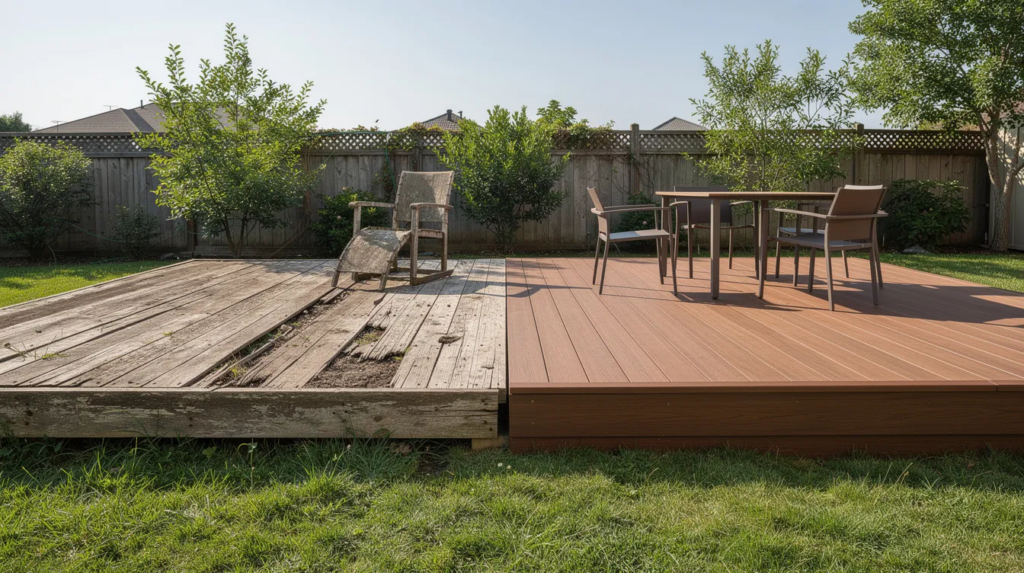
At some point, an old deck stops asking for a quick fix and starts asking for a real decision. Maybe one board has gone soft near the stairs. Maybe the stain looked fine in spring, then started fading again by the end of summer. A few screws rise out of the surface. The railings feel just loose enough to make you notice. None of these things seem dramatic on their own.
But together, they matter. That is usually when homeowners begin comparing composite decking vs wood. Not because every older deck needs to be replaced, but because the right decking material can change how much work the deck needs year after year.
When Wood Deck Boards Can Still Be Worth Saving
A wood deck is not done for just because the surface looks rough. If the frame is stable, the joists are dry, and the damage has not moved deep into the structure, repair can make good sense.
That repair might be modest. Replace a few deck boards. Sand rough areas. Add fresh stain. Traditional wood still has a loyal following because it feels natural and looks warm. Cedar or redwood decking can make an outdoor space feel more inviting. Redwood decking, ipe, pressure-treated wood, and pressure-treated pine each fit different budgets and different ways of using a deck.
But real wood does ask for regular maintenance. A well-cared-for wood deck can last 10 to 20 years, but homeowners should expect yearly maintenance in some form, especially when moisture sits on shaded boards. Cleaning, sealing, sanding, re-staining, or painting the surface again every 1 to 3 years is common. In a wet climate, the schedule becomes more important. Painted surfaces can peel faster where water collects, and UV rays can break down color on sun-exposed boards. Mold can appear under furniture or near trees. Eventually, untreated problems can turn into cracks, rot, splinters, or insect damage.
A wooden deck can be repaired. The better question is whether repair solves the problem or just resets the maintenance clock for another year.
Why Composite Decking Becomes a Low Maintenance Decking Material
Composite decking gets attention because it removes a lot of that repeat work. Unlike wood, composite does not ask homeowners to keep staining, sealing, and repainting it every few years. That is the big draw for anyone who wants minimal maintenance without giving up a usable backyard surface. A deck should feel comfortable under bare feet, not like another maintenance calendar hanging over the house.
Composite decking products often last 25 to 35 years on average, with some products lasting longer depending on brand, installation quality, sun exposure, and care. Composite boards also resist rot and insect damage. Many homeowners also look for a durable, slip-resistant surface, especially around stairs, rain-prone entries, and areas used by kids or pets.
That is why composite often appeals to homeowners who want:
- fewer staining and sealing cycles;
- better resistance to moisture, rot, and insect damage;
- a surface that holds its appearance with less yearly maintenance;
- more color and grain options than older synthetic decking;
- a deck that feels easier to live with between seasons.
- In a damp climate, those advantages are not small.
The design options are better than they used to be. Composite decking is available in different colors, grain pattern options, and finishes that can mimic traditional lumber. Some composite deck boards use realistic color blending, which helps the surface avoid that flat, plastic look. Trex Lineage, PVC decking, and plastic decking are often considered together, although each material feels and performs a little differently.
Many composite materials contain recycled material as well. Some products use a high percentage of recycled content, which can reduce the environmental impact compared with using only new wood products.
Still, composite is not perfect. The material cost can be higher upfront than wood. Some composite materials expand and contract with temperature changes. Darker boards can feel hot in summer, especially in direct sunlight. PVC and composite may also feel different from a natural product, which matters if the homeowner really wants the feel of traditional wood.
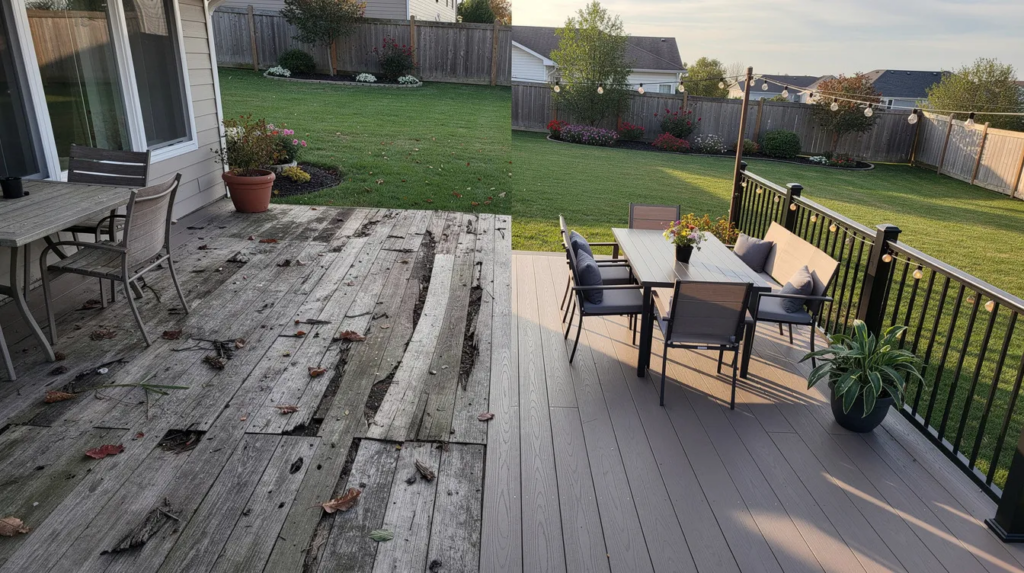
When Insect Damage, Color Fading, or Weak Framing Mean Repair Is Not Enough
One cracked board is not a crisis. Several soft boards are different. A worn stain is cosmetic. A damp frame is not. If screws no longer hold, railings shift, or boards keep failing across different parts of the deck, the problem may be deeper than the surface. A closer inspection usually makes sense when there are several warning signs at once:
- soft or spongy deck boards in more than one area;
- railings that move when pressure is applied;
- fasteners that no longer sit tight;
- boards that stay damp long after rain;
- visible rot, cracks, or insect damage near connection points.
Before paying for another patch, it is worth having a local deck contractor with Pacific Northwest building experience look at the full structure.
That means checking the joists, stairs, fasteners, drainage, railings, connection points, and the condition below the deck boards. Sometimes the right answer is a simple repair. Other times, the smarter choice is a properly planned new deck instead of repeated patch repairs.
A new deck built with better airflow, stronger materials, and the right board choice can save energy, money, and frustration over time. It can also give the space better long-lasting performance instead of another short season of “good enough.”
Best Decking Materials for the Next Deck Come Down to Real Life
Wood vs composite decking is not only a cost comparison. This is not only about materials. It is about what kind of deck the homeowner wants to maintain. Wood works well when the natural look matters and regular upkeep feels acceptable. Composite decking makes more sense when the priority is low maintenance, greater durability, and resistance to rot, fading, and insect damage.
The best decking materials are the ones that match the house, the budget, and real use. If the current deck is still structurally sound, repair may be the practical answer. But if every season brings another problem, it may be time to stop patching the old deck and build the next one with a better plan.