
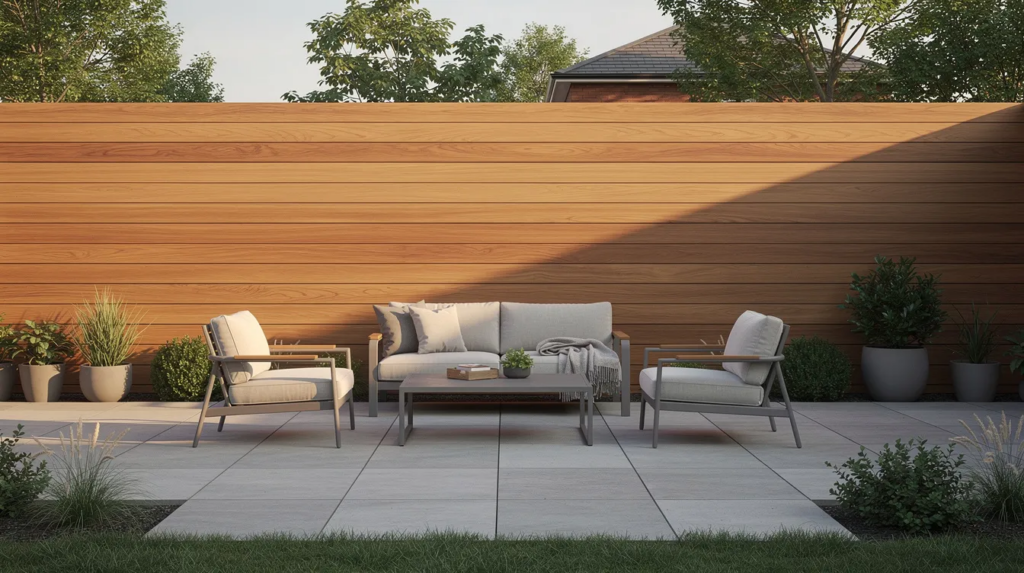
It frames the view from the door. It decides how private the seating area feels. It can make a narrow backyard look cleaner, give pets a secure space, or separate the garden without making the whole property feel closed in. The right layout can also enhance the way the house meets nature, especially when the fence does not fight the planting, shade, or open views. That is why horizontal fence ideas are not just about style. They are about how the yard works.
Why Horizontal Fences Work So Well in Modern Home Design
Horizontal fences are popular in modern home design because they create clean lines and fit modern design without adding too much visual noise. The eye moves across the board layout, not up and down at every break. In a small yard, that can make the space feel wider.
This is why horizontal fence ideas work so well near:
- concrete patios;
- modern outdoor furniture;
- simple planting beds;
- contemporary exterior details.
A horizontal board layout can feel calm without looking too polished.
The design can also change based on privacy needs. Tightly spaced boards, overlapping boards, or boards set only a few inches apart can create a privacy fence. Wider gaps let in more light and air. Cedar and redwood keep the look natural, while high-quality woods help with durability and longevity when finished properly. A simple tip: decide how much privacy is needed before choosing the board spacing, not after the frame is already built.
But horizontal fences need proper support. Long fence boards can sag over time if the frame is weak, so horizontal fences require frequent inspection for sagging boards.
|
Detail |
Why it matters |
|
Fence posts about every 6 feet |
Helps keep long boards from sagging |
|
Post holes dug 24 inches deep |
Gives the structure a stronger base |
|
More concrete and careful installation |
Can raise the cost and budget, but improves stability |
|
Avoiding stretched post spacing |
Helps prevent repair work later |
Trying to save money by stretching post spacing too far can lead to repair work later.
Why Vertical Fences Still Make Sense for a Privacy Fence
Horizontal vs vertical fence choices should depend on the yard, not only the look. Vertical fences may seem more traditional, but they are often easier to build on uneven ground. If the yard rises, dips, or shifts across one side, vertical panels can follow the grade more naturally.
They are also strong for privacy. Vertical fences provide maximum privacy with tightly spaced boards, which matters when a patio faces neighbors or a gate opens near a busy path.
The benefits are simple:
- fewer gaps;
- less exposure;
- better cover near patios, gates, and walkways;
- a more settled seating area.
There is nothing dramatic about it. It just works.
The maintenance detail is worth noting. On vertical fences, board ends face upward, so rain can affect the wood over time. A few details help protect the structure:
- caps;
- clean edges;
- paint or stain;
- proper installation.
Some homeowners also add vertical trellis elements near a garden, letting climbing plants grow without pressing directly against the main wood panels. Done well, that can add timeless elegance without making the exterior feel stiff.
Start With the Yard Before Planning Fence Posts and Post Holes
A dream fence should not begin with one inspiration photo or a search result saved in a rush. It should begin with normal questions. Where do people sit? Where does the dog run first? Which view should stay open? Where should the gate go so nobody has to walk around awkwardly?
This is where fence planning that supports how the yard is actually used matters more than picking a fence style too early. A fence can look good and still be wrong for the space. It might block too much light. It might leave gaps near the dining area. It might put a post exactly where a future project needs room.
The boring details matter too: post depth, wind exposure, ground conditions, tools, materials, and how the fence meets the soil. Crews still have to dig correctly, set the posts cleanly, and check how water moves through the yard. In Seattle, fencing design must also comply with city zoning codes for height limits. These are not the fun parts, but they decide whether the installation stays secure.
When Open Fencing Adds Timeless Elegance Without Closing the Yard
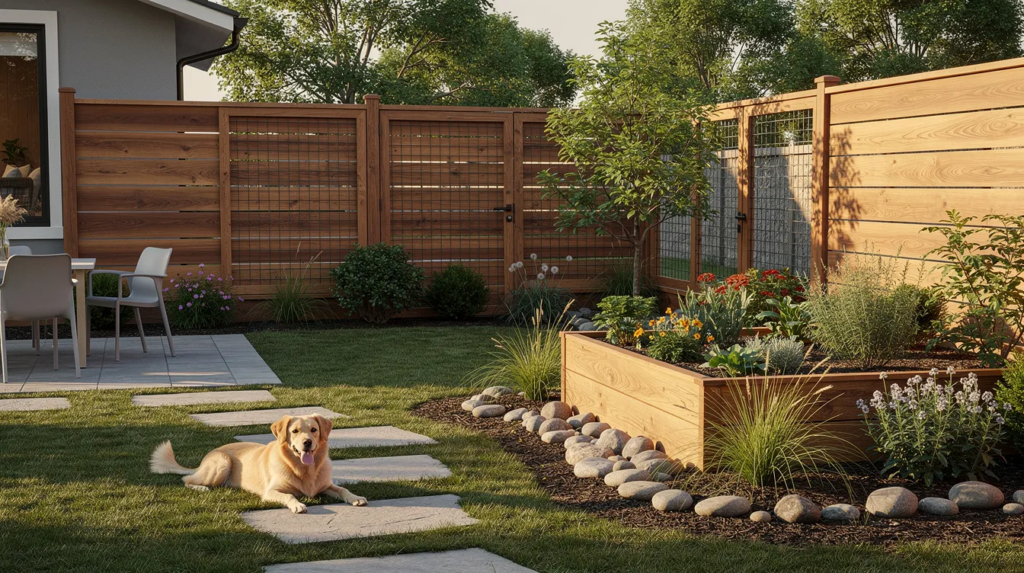
Not every backyard needs a solid wall. Sometimes a semi-private fence makes more sense because it keeps light and airflow moving while still creating a boundary.
Hog wire and cedar hybrids are useful for gardens, dog runs, and rear edges because they preserve sightlines while keeping pets contained. Chain link can also work in practical areas where the point is control, not full privacy. That is why hog wire and chain link fence options that keep the yard open can be smarter than a solid panel in the wrong place.
A custom mixed design can work too. Horizontal fencing near the seating area. Vertical fences along the neighbor-facing side. Open fencing near the garden. Integrated planter boxes can be built directly into fence lines for color and compliance. The point is not to make every foot identical. The point is to make each section make sense.
A good modern wood fence design should feel connected to the house, the door, the path, the plants, and the rest of the outdoor space. Modern wood fences can enhance property value with contemporary designs, but personal style still has to answer to the yard itself. Privacy where privacy matters. Openness where the view matters. Fewer posts where the layout allows it. Stronger support where the fence needs it. If an old layout no longer works, it may be better to replace one section than keep spending money on small fixes that do not solve the real problem.