
Table of Contents
ToggleStaging a kitchen well is mostly about presentation, not renovation, and presentation is mostly free. The week before a property goes live is when that staging gets built, and a kitchen handled well in those seven days can lift the impression a listing makes without a contractor ever being called. It pays off, too: in the National Association of Realtors profile of home staging, most sellers’ agents reported staging reduced time on the market, and the kitchen is among the most commonly staged rooms. The short version: declutter, deep-clean, maximize the light, and address the cabinets only if they are worn past what cleaning can fix.
What follows is a countdown, the order to do things in during the days before the photographer arrives, because sequence matters as much as the tasks themselves.
A Week Out: Declutter the Kitchen Before Staging It
Staging starts with subtraction, not decoration. A week before listing, strip the kitchen back. Clear the countertops down to a deliberate few items, the coffee maker can stay, the dish rack and the mail pile cannot. Empty the refrigerator door of magnets, photos, and paper, which read as visual static in person and in photos. Then thin the cabinets and pantry, because buyers open them, and a half-full cabinet signals generous storage while a crammed one signals the opposite.
The principle running through all of it is that empty space reads as abundant space. A kitchen with clear surfaces and breathing room in the cabinets looks larger than the identical kitchen stuffed full, and “feels small” is one of the objections that costs a sale.
Mid-Week: Deep-Clean the Kitchen for Showings
Once the surfaces are clear, deep clean, and go further than daily-clean. Buyers extrapolate from the kitchen’s cleanliness to the parts of the house they cannot inspect, so a gleaming kitchen quietly vouches for the whole property. Spotless countertops, clean grout lines, polished faucet and hardware, streak-free appliance fronts, and crucially the cabinet faces wiped down to an even sheen, fingerprints and cooking film removed from around the handles where it collects.
This is also the moment to notice whether the cabinets clean up or not. A cabinet that wipes to a fresh, even finished stage beautifully for free. One that stays dull, chipped, or visibly worn no matter how hard it is cleaned has crossed from a presentation problem into a condition problem, which the next section addresses.
A Few Days Out: Light the Kitchen for Staging
Dark kitchens photograph as dingy and read as smaller and dated in person, so light is the next lever. Open every blind and curtain to bring in daylight. Replace any dim or mismatched bulbs with the brightest appropriate, consistent color temperature, no one warm bulb beside one cold one. Confirm every fixture actually works, including under-cabinet lighting if it exists, since that under-cabinet glow is one of the cheapest ways to make a kitchen look finished and current. A bright kitchen looks clean, current, and spacious all at once, which is the entire goal.
Should You Replace Kitchen Cabinets Before Selling?
Sometimes the presentation hits a wall, and it is usually the cabinets. If they are sound underneath and only the color is dated, a repaint or reface refreshes them at modest cost and the staging proceeds. But if they are damaged, peeling, or visibly worn past what cleaning and paint can rescue, no amount of decluttering and lighting will fully hide it, because worn cabinets are among the first things a buyer registers.
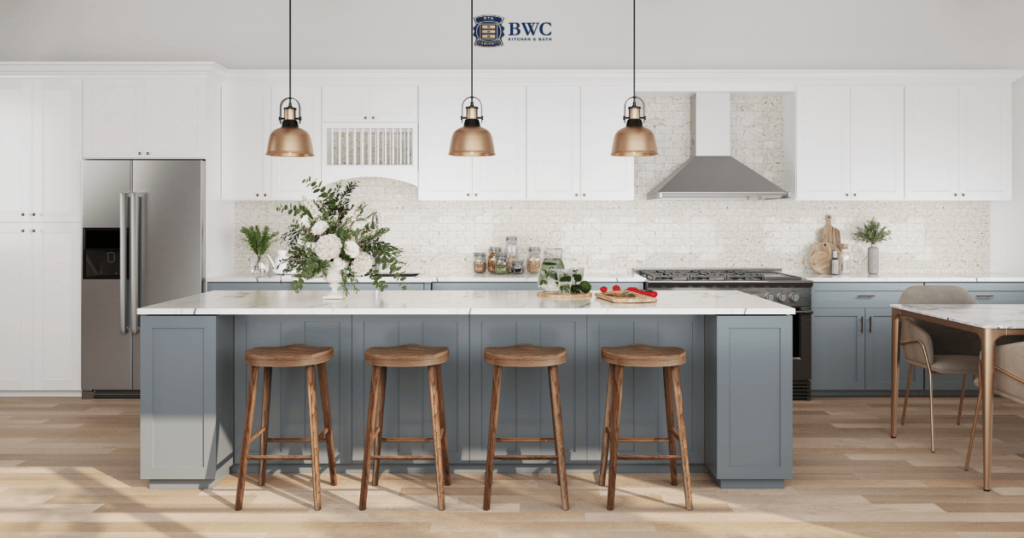
When replacement is the honest call, cost control is what protects the sale, the spend has to stay well under the value the fresher kitchen adds. Ready-to-assemble cabinetry is built for exactly this situation. A neutral white shaker line delivers the clean, bright, broadly appealing look that both stages well in person and photographs especially well, and it reaches the widest pool of buyers, which is precisely what a listing wants. White and light finishes are the safest staging choice for the same reason they photograph well: they read clean and current to nearly everyone. The same logic carries to the bathroom, the other room buyers scrutinize, where swapping a tired vanity for a fresh one refreshes the space without the overspending that a sale cannot recover.
Photo Day: Staging the Kitchen for Listing Photos
On the day itself, the same rules apply but intensified, because the camera exaggerates everything. Countertops should be nearly bare; clutter that is forgivable in person looks like chaos in a photo. Lighting should be maxed out. Then add the small, deliberate signals of a cared-for kitchen: fresh flowers or a bowl of fruit, a single cookbook propped open, a neatly folded tea towel. These read as a kitchen that is lived in and loved, not staged, which is the impression that makes a buyer want to stand in it.
Frequently asked questions about kitchen staging
What’s the most important kitchen staging step? Decluttering. Clear counters and thinned cabinets make the kitchen read as larger and better organized, and “feels too small” is a common objection that staging removes for free.
Do I need to renovate the kitchen before selling? Usually not. Most of staging’s payoff comes from decluttering, cleaning, lighting, and neutralizing, all nearly free. Renovation only enters when the cabinets are worn past what cleaning and paint can fix.
What cabinet color photographs and shows best? Neutral white and light shaker finishes. They read clean and current to the broadest range of buyers and photograph especially well, doing double duty for the listing images and the in-person showing.
Should I replace cabinets just to sell? Only if they are damaged or worn beyond what repainting or refacing can fix. When replacement is necessary, a cost-effective RTA line keeps the spend below the value the refreshed kitchen adds.
Why does the kitchen matter so much for a sale? Buyers judge a home’s overall condition by its kitchen more than by any other room, and they form a first impression from the listing photos before they ever visit, which is why both the staging and the photos center on this room.
Run the countdown in order, subtract, clean, light, then decide the cabinet question honestly, and add the final touches on photo day, and a kitchen presents at its best for the cost of a weekend and some bulbs. The expensive interventions are rarely necessary. The free ones, done in the right sequence, are what shape the impression every buyer carries away.