
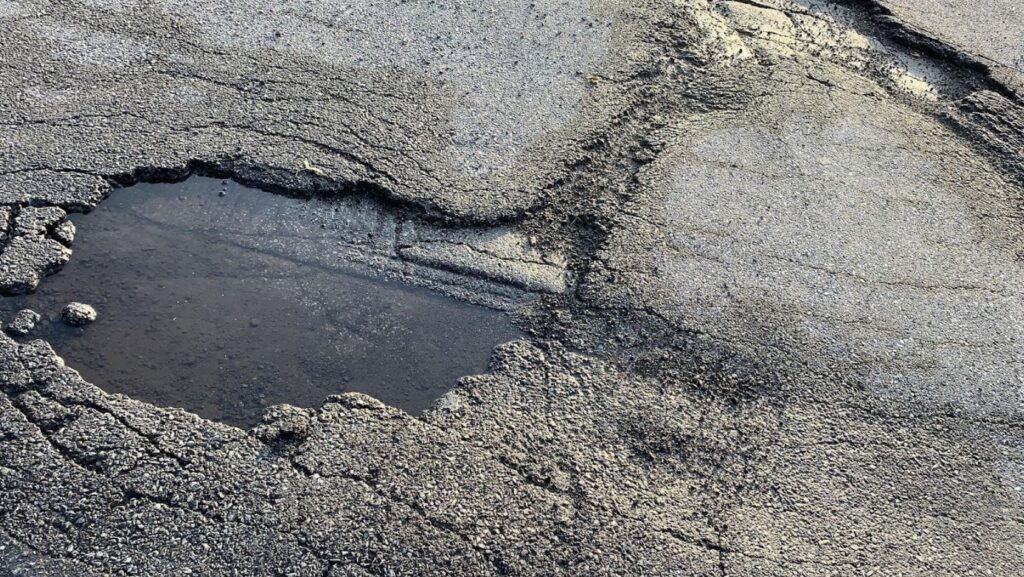
Parking lot cracking and deterioration stem from a combination of environmental stressors, structural weaknesses, and maintenance gaps. Key contributors include water infiltration due to poor drainage, repeated freeze-thaw cycles common in Canadian climates, inadequate subbase support, heavy or repetitive vehicle loads, and delayed upkeep. Understanding the root causes – such as why parking lots crack under thermal stress or how oil spills accelerate surface breakdown – is essential. With proactive care, many of these issues can be mitigated long before major repairs become necessary.
Table of Contents
- Why Parking Lot Surfaces Fail Over Time
- Common Causes of Parking Lot Cracking & Deterioration
- How to Prevent Parking Lot Deterioration
- Final Thoughts: Protect Your Pavement Investment
Picture this: a smooth, jet-black parking lot on opening day – clean lines, no potholes, and a surface that gleams under the sun. Fast-forward five years, and the same lot is riddled with cracks, faded markings, and uneven patches. What changed? Often, it’s not just time – it’s a series of overlooked vulnerabilities. From improper installation to skipped maintenance, small oversights compound into costly damage. For property owners and facility managers, recognizing the early signs of wear can save thousands in future repairs.
Learn more about how foundational choices impact long-term pavement performance. In the sections ahead, we’ll unpack the real causes of parking lot cracking, clarify why deterioration happens faster in some cases, and share practical strategies to extend the life of your asphalt investment – no matter where you are in Canada.
Why Parking Lot Surfaces Fail Over Time
At first glance, asphalt seems indestructible – dense, dark, and durable. But beneath that tough exterior lies a material highly responsive to its environment and usage patterns. Over time, even well-constructed parking lots begin to show signs of distress, not because asphalt is inherently flawed, but because it’s constantly battling forces that degrade its integrity.
The reality is that most surface failures aren’t sudden; they’re the result of compounding stressors. Water finds its way into tiny fissures, traffic loads fatigue the binder, and seasonal temperature swings cause expansion and contraction. Without intervention, these micro-damages evolve into structural issues. This gradual decline is why understanding why parking lots crack is essential – not just for repair, but for smarter planning and longer service life.
Unlike indoor flooring or protected surfaces, parking lots are exposed 24/7 to the elements, chemicals (like oil and de-icing salts), and mechanical wear. A single overlooked crack can become a pothole within a season, especially in regions with harsh winters. The good news? Much of this deterioration is preventable with foresight and consistent care. Recognizing that failure begins long before it’s visible allows property stewards to shift from reactive fixes to proactive preservation – ultimately helping them extend life of parking lot pavement without major capital outlays.
Common Causes of Parking Lot Cracking & Deterioration
While every parking lot will age, not all deterioration is created equal. Some surfaces last decades with minimal upkeep, while others show distress within just a few years. The difference often lies in how well the pavement was designed for its environment and use – and how it’s been cared for since installation. Understanding the causes of parking lot cracking helps property managers prioritize fixes before small issues become structural failures.
Water Damage and Poor Drainage
Water is the single greatest threat to asphalt longevity. When surface water isn’t directed away efficiently – due to flat grading, clogged catch basins, or blocked curbs – it pools and seeps into the pavement. Once inside, it softens the subbase, erodes supporting soils, and creates voids. Under traffic loads, these weakened zones collapse, forming potholes or alligator cracking. In Canada, where spring thaw releases massive volumes of meltwater, proper drainage isn’t optional – it’s essential.
Subbase and Foundation Issues
Asphalt is only as strong as what lies beneath it. A poorly compacted or inadequately engineered subgrade can’t bear repeated loads, leading to settlement and surface deformation. If the base contains organic material, clay, or inconsistent fill, it may shift seasonally – especially when moisture levels change. This movement creates stress fractures that propagate upward, often appearing as random or longitudinal cracks.
Heavy or Constant Traffic
High-traffic zones – like entrances, exits, and delivery bays – endure concentrated stress from turning, braking, and idling vehicles. Heavy trucks and service vehicles exert pressure far beyond what standard asphalt mixes are designed to handle over time. Without reinforced design in these areas, rutting, fatigue cracking, and edge breaks become inevitable.
Weather Extremes (Especially Freeze-Thaw Cycles)
Canadian climates pose a unique challenge. During winter, water that has entered micro-cracks freezes and expands, prying cracks wider. When temperatures rise, the ice melts, leaving larger gaps for more water to enter – repeating the cycle. This freeze-thaw action accelerates cracking exponentially. Meanwhile, summer UV exposure oxidizes the asphalt binder, making the surface brittle and prone to ravelling (loss of aggregate).
Lack of Preventive Maintenance
Perhaps the most preventable cause of deterioration is neglect. Skipping routine care – like crack sealing, sealcoating, or sweeping debris – allows minor damage to escalate. Oil and fuel spills break down asphalt chemically, while vegetation growth can widen cracks from within. Without a consistent maintenance rhythm, even a well-built lot can deteriorate prematurely.
How to Prevent Parking Lot Deterioration
Preventing pavement failure isn’t about perfection – it’s about consistency. The goal isn’t to stop aging entirely (asphalt, like all materials, has a lifecycle) but to slow degradation and avoid premature reconstruction. The right approach combines smart design, timely interventions, and routine oversight. In fact, a well-maintained lot can easily last 20–25 years, whereas a neglected one may need major work in under a decade.

Understanding how to prevent asphalt deterioration starts with recognizing that protection is layered: from the foundation up to the surface seal. Below are practical, field-tested strategies that property owners across Canada can implement – regardless of lot size or location.
Essential Parking Lot Maintenance Tips
Sealcoat every 2–3 years: This protective layer shields asphalt from UV rays, water, and chemical spills. It also restores flexibility to the binder, reducing brittleness in cold weather.
Seal cracks as soon as they appear: Cracks wider than 3 mm should be cleaned and filled with a flexible polymer-based sealant. Early intervention stops water from reaching the base.
Keep drainage clear year-round: Inspect and clean catch basins, gutters, and slope lines each spring and fall – especially after heavy storms or snowmelt.
Restrict heavy vehicles in vulnerable zones: Use signage or bollards to prevent large trucks from turning or idling in thin or high-stress areas.
Sweep regularly: Debris like sand, gravel, and leaves trap moisture and accelerate surface wear. Weekly sweeping in high-traffic zones makes a measurable difference.
Maintenance Timeline Comparison
| Pavement Age | Recommended Action | Purpose |
| 0–2 years | Apply the first sealcoat | Lock in binder integrity and enhance appearance |
| 3–5 years | Crack seal + reseal | Block water intrusion and slow oxidation |
| 6–10 years | Patch localized damage; assess for overlay | Address wear without full reconstruction |
| 10+ years | Conduct a structural evaluation | Determine if resurfacing or full-depth repair is needed |
Beyond these steps, consider seasonal adjustments: avoid salting excessively in winter (use sand or eco-friendly alternatives when possible), and limit parking during extreme heatwaves when asphalt softens. These small choices compound into significant longevity gains.
Ultimately, the aim is to extend life of parking lot pavement through proactive care – not emergency fixes. With a modest annual budget for upkeep, most property managers can defer major capital expenses while maintaining safety, compliance, and curb appeal.
Final Thoughts: Protect Your Pavement Investment
A parking lot is more than just a place to leave your car – it’s a critical piece of infrastructure that affects safety, accessibility, and first impressions. Yet too often, it’s treated as an afterthought until cracks become craters or drainage issues flood walkways. The truth is, pavement doesn’t fail overnight. It sends signals: fading colour, minor cracking, pooling water, loose gravel. Responding to these cues early is what separates manageable upkeep from emergency reconstruction.
The strategies outlined in this article – from understanding the causes of parking lot cracking to applying smart parking lot maintenance tips – aren’t just technical recommendations; they’re cost-saving practices grounded in decades of field experience. Whether you manage a small retail plaza or a multi-acre commercial complex, a consistent, preventive approach pays dividends in durability, compliance, and user satisfaction.